make preferable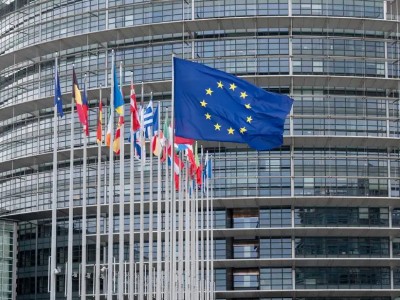
The European Parliament has adopted a resolution calling on Serbia to fully align its foreign policy with that of the European Union, including by joining sanctions against Russia. The resolution was approved on October 22 during a plenary session in Strasbourg, with 457 votes in favor, 103 against, and 72 abstentions.
In the resolution, the European Parliament reaffirmed its “strong commitment to Serbia’s EU membership perspective,” on the condition that the country makes significant progress in democracy, rule of law, respect for fundamental human rights, and “full alignment with the EU’s Common Foreign and Security Policy,” including in the area of sanctions against Russia.
The document was adopted against the backdrop of “continued political polarization and state pressure in Serbia one year after the tragedy in Novi Sad.” It states that the Serbian leadership bears political responsibility for intensifying repression, normalizing violence, and weakening democratic institutions. The Parliament also called for a transparent trial regarding the collapse of a train station roof that resulted in casualties.
MEPs urged Belgrade to “immediately and fully implement the recommendations of the OSCE/ODIHR election observation mission” to ensure free and fair elections. In addition, the Parliament supported sending an EU mission to Serbia as soon as possible — including representatives from the European Parliament — “to assess the situation on the ground, including the state of democracy, ongoing protests, and the pressure exerted on their participants.”
Earlier, during her visit to Belgrade on October 15, European Commission President Ursula von der Leyen also stressed that Serbia’s path to EU membership would be blocked without sanctions against Moscow. “We need to see greater alignment with our foreign policy, including sanctions against Russia,” she said, adding that without this, Brussels cannot consider Serbia a “credible partner.”
Serbia applied for EU membership in 2009, received candidate status in 2012, and began accession talks in 2013. Under EU requirements, all candidate countries must align their foreign policy with Brussels’ decisions and meet the Copenhagen criteria — ensuring stable democracy, rule of law, human rights protection, and readiness to assume the Union’s political and economic obligations.
President Aleksandar Vučić stated during his meeting with von der Leyen that EU membership remains Serbia’s strategic choice and foreign policy priority. “And that will not change — at least until the next elections, and I believe even after them,” he said, emphasizing that Belgrade remains committed to European integration despite the difficulties in the negotiation process.
In July, Serbia’s Minister for European Affairs, Nemanja Starović, said that Serbia might impose sanctions on Russia if the country’s prospects for EU membership become “clear and tangible.”