make preferable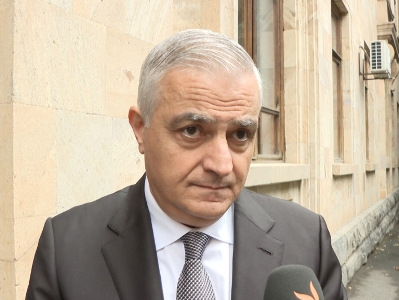
Azatutyun, the RFE/RL’s Armenian service, spoke with Armenia’s Deputy Prime Minister Mher Grigoryan about the “Trump Route” project; here is an excerpt from the interview.
Mr. Grigoryan, it is known that you are engaged in the unblocking [of regional communications], and also in implementing the agreements reached with the Azerbaijani side during the Washington negotiations at this phase. At what phase is work to clarify the framework of the “Trump Route” program according to that agreement.
Yes, the work is ongoing. Essentially, the appearance, form, and content of infrastructures are discussed in quite deep, detail.
What will the “Trump Route” program framework include — that 42km [section], or what? Is it clear what it will include?
You know, I think that, in principle, the declaration provides the answer to this question. It is all types of transport connections — energy, roads, railways, all types.
But only in that 42km section?
The 42 km you say is the length of the railway; the other infrastructures still require technical inspection and business planning. You know, I believe that you probably imagine it visually differently. This is not a hub that will be at one specific point, or in one location, or along one line; it depends on the infrastructure — each infrastructure will have its technical specifications and plan. As for the 42–43km section, I assure you that it concerns the railway because the railway route is already clear, it does not need changes because it concerns the restoration of the Soviet Union-era railway, whose parameters are very objective and specific.
Is it clear, Mr. Deputy Prime Minister, which infrastructure will start in the first phase, from where will the construction begin?
I don’t want to get ahead now. But in terms of the work done so far, I believe the most mature solutions concern the railway. Because first, the railway…we have worked extensively on it — on the infrastructure. Second, the parameters of the [railway] infrastructure are much better known than all the others. Why? Because the railway existed during the Soviet era and needs to be restored. The remaining transit infrastructures did not exist for known reasons during the Soviet Union era, and they need to be designed from scratch. That is why I cannot talk with you about the more specific parameters right now.
Can you indicate the exact railway route — the section that will connect Azerbaijan with its [Nakhichevan] exclave?
Since [20]20–[20]21, we have discussed that section of the railway infrastructure, including Yeraskh [village of Armenia], via the Nakhchivan line and from our south.
Is it the same logic now?
Yes, yes, no logic has changed in this sense.
And will the American side also make investments in the Yeraskh section?
I will answer your question as follows: However, it is clear to everyone, to all parties, that the infrastructure will be much more beneficial, have a much deeper meaning, and have a more strengthened regional logic if the Yeraskh section is connected.
But according to the agreement, will the investments there in the Yeraskh section be American or Armenian?
According to the agreements, this concerns regional integration of infrastructures, meaning [that] all possible connections must be realized; otherwise, the fragment of the infrastructure will not fulfill its role, it won't have the role we're talking about.
Will these routes open synchronously?
Of course, they must open synchronously; otherwise, it will not function fully.