make preferable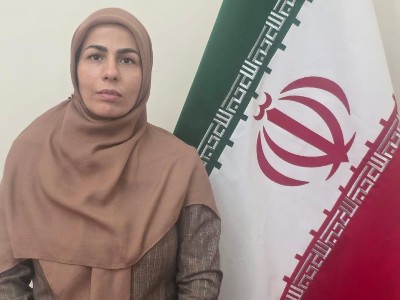
In Iran, Women’s Day and Mother’s Day are celebrated on the same date, which is the anniversary of the birth of Hazrat Fatima Zahra (SA), the daughter of the Prophet Muhammad (PBUH). This date is based on the Islamic lunar calendar, so it changes every year in the solar (Gregorian) calendar.
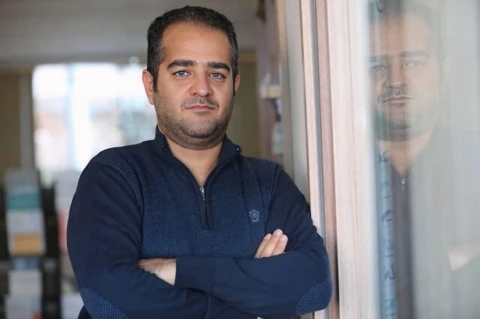
On this day, in Iran, ceremonies and events are held to appreciate the role of women in society, family, education, healthcare, science, governance and other spheres. It is also a moment, to highlight achievements of Iranian women, discuss women’s rights, and promote their active contributions in social development. On this occasion we present an interview with Neda Raefipour, Third secretary, Embassy of the Islamic Republic of Iran in Armenia.
How Islamic Republic of Iran is empowering Iranian women in the field of education?
According to the progressive principles of the Constitution, Iran’s educational system guarantees free education up to secondary school and access to higher education for all. Additionally, policy frameworks such as the Charter on Women’s Rights and Responsibilities and innovative laws related to women’s education have paved the way for reducing the gender gap and creating equal learning opportunities. Leveraging these achievements, Iran has taken firm strides toward educational justice and women’s empowerment, presenting a successful model in this domain.
Remarkable Achievements in Girls’ Education is one of Iran’s most notable educational advancements. The 115% rise in primary school enrollment and the 84% increase in high school participation highlight special attention to girls’ education and equal opportunities.
Additionally, the 48% growth rate in female students compared to males reflects a positive societal shift in attitudes toward girls’ education and its crucial role in sustainable development. These improvements, have not only elevated the country’s scientific status, but also enabled women’s active participation in social, economic, and cultural spheres. Supporting Talented Female Students & Global Achievements, the National Elites Foundation was established to provide special support for gifted students, offering unique facilities to enhance their capabilities. of the 62,500 students supported, 15,772 (25%) are girls.
On the international stage, Iran achieved remarkable success in the 2024 International Olympiads, securing third place worldwide across five major competitions with participation from 53 to 110 countries. Iranian students attained: • 1st place in the International Astronomy and Astrophysics Olympiad, • 4th place in Biology and Physics, • 8th place in Chemistry, • 9th place in Computer Science, • 18th place in Mathematics.
What is Iranian women’s role in decision-making and public life?
Women’s participation in public life and decision-making is a fundamental pillar of sustainable development and social progress in any country. As enshrined in the laws of the Islamic Republic of Iran, political participation and access to leadership positions are recognized as a right for women. In recent years, significant strides have been made to enhance women’s presence in key governmental and managerial roles based purely on merit and justice, leading to an increase in the percentage of female managers in government agencies from 12% to 30%. According to the National Administrative Statistics Yearbook, by the end of 2022, the total number of official, contractual, and temporary employees in executive organizations reached 2,246,397 people, of whom 1,247,559 (56%) were men and 998,838 (44%) were women. By the end of 2024, this ratio is projected to shift to 45% women and 55% men, demonstrating a clear commitment to gender equity in employment within Iran’s administrative system. Further analysis of employment distribution by government branches in 2023 shows that: 45.9% of employed women work in the executive branch. 22.98% in the judiciary. 13.31% in the legislature. 17.81% in institutions outside the three branches of government.
Growth in Women’s Leadership Positions the appointment of women to leadership and decision-making roles has seen significant growth. Between 2020 and 2023, the number of women in managerial positions more than doubled, rising from 19,597 in 2020 to 42,396 in 2023.
More than 190 women have been appointed to senior managerial positions, marking historic firsts in the Islamic Republic of Iran’s governance. Key appointments include: Four women in the 14th Cabinet. 14 women leading national institutions under direct presidential orders. 13 female deputy ministers. 17 women as advisors and assistants to ministers. 110 female directors-general. 17 female governors and 16 female district governors. This approach emphasizes inclusivity, ensuring representation from diverse ethnic and social backgrounds. Additionally, with the President’s directive to increase women’s presence in senior provincial leadership (e.g., governors, district governors), the government aims to appoint 1,885 women to managerial roles across ministries, affiliated organizations, and local administrations by the end of 2024.
What is the role of Iranian women’s leadership in environmental and crisis management?
Recognizing the significance of this issue, the Islamic Republic of Iran has undertaken numerous initiatives to increase women’s participation and leadership in key environmental and crisis management sectors. These efforts include developing educational programs, signing cooperation agreements, and creating job and leadership opportunities for women in both governmental and nongovernmental organizations. Empowering women in decision-making and policy-setting roles has been a priority, demonstrated by their appointment to five consecutive terms as Vice President and Head of the Department of Environment, a position with national authority over environmental policies. Additionally, women have led the National Meteorological Organization, held one-fourth of senior management positions in environmental agencies, and spearheaded regional environmental initiatives in Asia. Iran has also worked toward securing a regional representative seat (Asia) in the World Meteorological Organization’s Special Task Force for reviewing regional environmental strategies. Moreover, an Iranian woman, has been appointed as the Special Advisor on Hydrology Coordination and Deputy Chair of the Regional Services Working Group (Asia) of the World Meteorological Organization. Educational and Youth Engagement in Environmental Protection In addition to leadership initiatives, Iran has introduced new educational programs in high schools and technical institutes, such as ranger training courses, to raise awareness among young people about environmental conservation. By incorporating environmental studies into the education system, Iran is fostering a generation of environmentally responsible and conscious individuals who will play a vital role in the country’s sustainable future.
What recent initiatives has Iran introduced to strengthen women's roles in addressing environmental and social challenges?
Iran has also prioritized women’s needs in disaster response efforts, particularly during natural disasters and crises. Key actions include: Providing hygiene and medical supplies tailored for women in affected areas. Offering low-interest loans to female-led households to support recovery efforts. Establishing safe shelters for women in disaster-stricken regions. These measures highlight the essential role of women in crisis management and their empowerment in addressing environmental and social challenges. The establishment of the “Women and Climate Change” working group, chaired by the Vice Presidency for Women and Family Affairs, is one of Iran’s most recent initiatives. This group, composed of representatives from various government bodies, aims to leverage women’s potential, empower families, and enhance women’s active participation in climate change mitigation and crisis prevention. Women are recognized as key drivers of sustainable development, playing a critical role in shaping climate resilience strategies and environmental policies.
What roles do Iranian women play in sports leadership at the international and national levels?
In recent years, the Islamic Republic of Iran has taken significant steps to enhance women’s participation in sports, recognizing their crucial role in this field. One of the most notable achievements has been winning over 3,950 medals in global competitions, showcasing the exceptional talent and resilience of Iranian female athletes. These accomplishments not only bring pride to the nation but also inspire future generations to engage more actively in sports. Additionally, the participation of over 935,000 professional female athletes across the country highlights the growing culture of sports and the increasing involvement of women in athletic activities. Women in Sports Leadership Iranian women have also made remarkable strides in sports leadership and management: 85 Iranian women are engaged in international sports organizations, contributing to decision-making at the global level. Over 100 leadership positions in international sports federations are held by Iranian women, reinforcing their influence in shaping global sports policies. 51 women serve as presidents and vice presidents of national sports federations, while approximately 70 women lead provincial sports committees, marking a major step forward in sports governance and leadership. Women in Coaching, Refereeing, and Sports Education Iranian women have also excelled in sports education and coaching, playing a crucial role in developing future athletes: Over 9,000 female sports instructors actively contribute to training programs. More than 150,000 female sports coaches’ mentor and guide athletes across various disciplines.
Over 97,000 female referees officiate at national and international sporting events. Approximately 16,111 women-only sports clubs provide dedicated spaces for female athletes to train and compete. Women in Paralympic Sports Iranian women have achieved outstanding success in Paralympic sports, with a 62% increase in female participation leading to global recognition: Iran’s National Paralympic Committee was honored with the 2025 International Women’s Day Award for its efforts in empowering female athletes with disabilities. This achievement underscores Iran’s commitment to inclusivity and equal opportunities in sports, ensuring that women with disabilities have the support and resources needed to excel on the global stage. Conclusion These achievements collectively demonstrate Iran’s dedication to fostering women’s participation in sports at all levels—athletic, managerial, and educational. By supporting female athletes, expanding leadership roles, and creating inclusive opportunities, Iran continues to pave the way for women to attain top positions in national and international sports arenas.