make preferable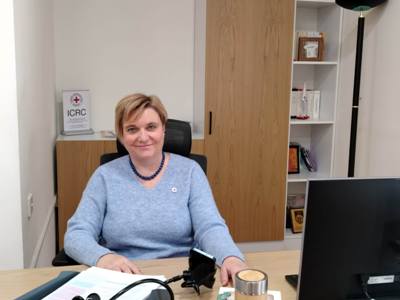
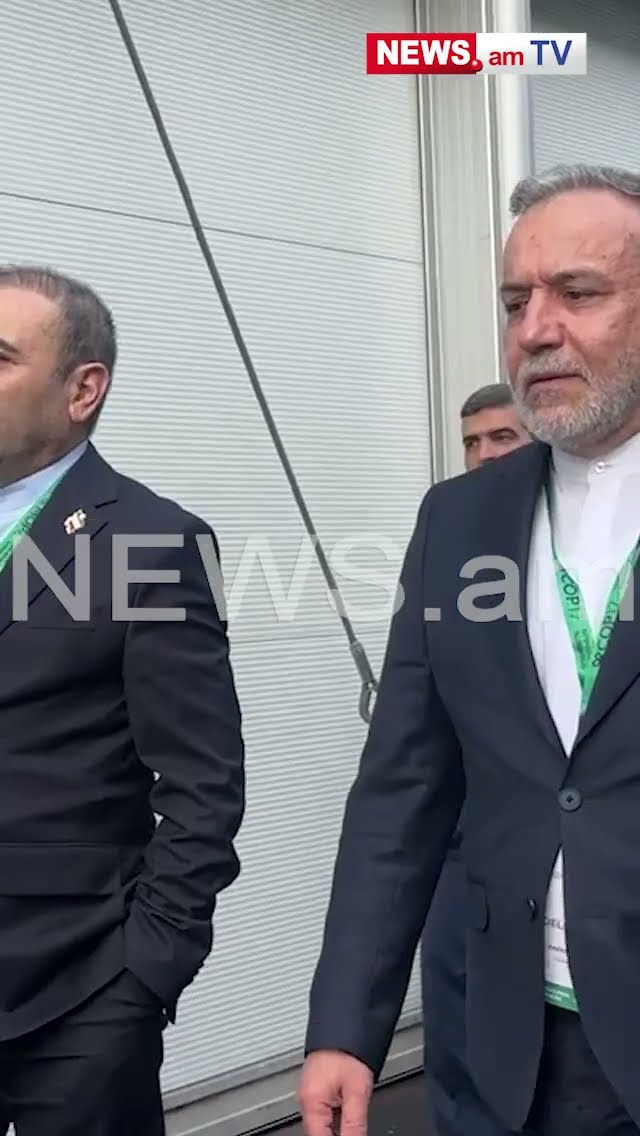
The activities of the International Committee of the Red Cross (ICRC) Delegation in Armenia, work with the families of missing persons, current and planned programs were discussed with Daphnée Maret, Head of Delegation, in an interview with Armenian News-NEWS.am. We present below the text of this interview.
The ICRC began its activities in the region in the early 1990s during the Nagorno-Karabakh conflict. How do you assess the ICRC's contribution as a neutral intermediary in the return of persons on the sides?
The ICRC is guided by the principles of confidentiality, neutrality, and humanity in its work. Of course, assessing our role in this regard is a rather sensitive matter. It is very difficult to share observations publicly, in part because we strive to avoid jeopardizing our work, including with respect to the fate of the persons we work for. The most positive factor that has allowed us to carry out our work as a neutral intermediary has been our physical presence across the region. Until recently, the ICRC had delegations in Yerevan and Baku, as well as a mission in Nagorno-Karabakh. Our presence in Karabakh was unique, as other organizations did not have such a presence. This enabled us to work in accordance with our role and mandate for many years.
As a neutral intermediary, the ICRC was most active in the 1990s and during the escalations of the conflict in 2020-2023. As a non-political organization, our neutrality is necessary to emphasize the humanitarian focus of our work.
Currently, while we are on an interesting development path, with the possibility of concluding a peace agreement and the document already initialed, humanitarian issues remain part of the peace process. In summary, I would like to note that all the work of the ICRC over these years, including its role as a neutral intermediary, has contributed to the creation of a conducive environment for addressing issues related to the humanitarian agenda.
How many persons (bodies) have been handed over through the ICRC in recent years?
Regarding statistics, I must say that the organization does not share exact figures. We talk more about general data. At the same time, we can speak of hundreds of persons and bodies that have been handed over to parties of the conflict region through the ICRC's neutral intermediary role over the recent years.
Is any work currently underway to search for missing persons and graves?
The ICRC generally supports the process in this matter, while the official parties bear responsibility for the active search. We have continuously provided support in this matter to date and are committed to continue doing so, as the issue of missing persons remains relevant even after the signing of the peace agreement. We are ready to continue to assist in resolving this issue.
Please tell us about the missing persons’ database.
The database has been primarily created based on the tracing requests from families. The information we receive firsthand is gathered from people searching for their missing relatives. Since the 1990s and including data from the 2020-2023 escalations, the total number of missing persons on the sides has reached over 5,000. There are over 1,000 Armenians and ethnic Armenians on this list.
Families often struggle to accept reality. Until they accept it, the missing person's name remains in the database.
Every family goes through this painful process of ambiguous loss and accepting the reality, and in this sense, our work is not limited to obtaining information and interviews. We have a psychosocial support team to ensure that families are not left alone with their grief, and specialists work with them.
On the other hand, the ICRC delegation cooperates with the relevant authorities, primarily with the Scientific-Practical Center of Forensic Medicine of the Ministry of Health. Our work with this structure is aimed at raising the quality of human remains identification and management, ultimately achieving accreditation that meets international standards. We are proud of their achievements. Certainly, during the conflict escalation, the SPCFM staff was overwhelmed with work, and sometimes criticism of them was unfounded. Understanding that more work was needed, the ICRC facilitated the attraction of world-class specialists to support them. Our work with this structure continues,
Another important aspect concerns communication, no less important than technical equipment and capacity. This concerns communication between families of the missing and government officials. This is an intensive process; we helped families of missing persons in the 1990s and 2020s unite into an umbrella association, and we help them to work more effectively with the authorities. Addressing the uncertainty of loss is an energy-consuming process. The authorities need to be equipped on how to better listen to people (and we support them in that regard), and the families need to know who to contact with what questions. It can be said that our work within the association is carried out precisely to ensure that the communication aspect works for the benefit of the process.
Following the closure of the ICRC delegation in Azerbaijan, the only international organization with access to Armenian prisoners is essentially no longer able to do so. You noted that the ICRC is seeking ways to restore dialogue with Baku. Has this issue been resolved?
As stated, we remained committed to finding avenues to continue the dialogue. Azerbaijan is a sovereign state, and while respecting its decision for us to leave the country, we nonetheless continued the dialogue and cooperation, which was never stopped. Ultimately, we were able to fulfill the need to address the existing humanitarian issues in which the ICRC can play a role. This concerns persons protected under international humanitarian law (IHL). On 24-25 December, access was obtained to the Armenians detained in Azerbaijan. The visit took place in accordance with standard ICRC procedures, just as these visits had been conducted before, and to the same extent, before the closure of the delegation in Baku. The difference is that this visit took place at the level of the ICRC headquarters in Geneva, and our dialogue proceeds at this level with the Azerbaijani authorities. In this regard, the dialogue is aimed not only at people in detention but also at other groups protected by IHL. We are hopeful that our dialogue will continue as well on issues related to missing persons.
Recently, it was reported that a group of Armenians remaining in Nagorno-Karabakh wished to move to Armenia. Were ICRC representatives able to visit these individuals?
I would like to note that we have been addressing the concerns of Armenians remaining in Karabakh for a long time. The decision to move to Armenia is entirely theirs. In the past, the ICRC has facilitated such transfers, also based on the individual requests. We continued to follow up on those remaining even after our organization ceased its presence in Karabakh. However, this is a very recent event, and we have not yet had the opportunity to visit them. The ICRC visits these individuals upon their arrival to determine whether they have any additional needs, which we, as a neutral humanitarian organization, can provide through social or psychological assistance. In this situation, it is crucial for us to understand who exactly has come, as we do not yet have specific information, but we have already inquired with the Armenian authorities about the possibility of visiting these individuals, including to understand who remains.
Have we been able to visit the four individuals previously transferred by the Azerbaijani authorities?
The situation is similar to the above. They were transferred recently, and given that there may be other priorities, such as their reconnection with their families, we have not yet had the opportunity to visit them. However, I would like to remind you that ICRC representatives visited these individuals last time at the end of December 2025. Debriefings help us assess their condition and the need for psychosocial support for these individuals and families. Social assistance is also considered, if necessary. There is also a certain emotional connection between ICRC staff and the returned individuals, whom we’ve visited throughout their detention. It's really very emotional: the organization that supported them during their difficult time is meeting with them now that they are free.
The declared beginning of a peaceful era by the Armenian and Azerbaijani authorities essentially changes the focus of the ICRC's mission in the region. What programs are currently being implemented?
We can say that we are currently in a transitional period. We hope that this process will culminate in long-term peace, and our work will adapt to this process. Thus, the situation has emerged from the state of emergency, and programs directly related to healthcare and economic security, such as water supply, are gradually being scaled down. Accordingly, community assistance programs implemented for many years in the border regions will be gradually phased out. I should note that over the past seven to eight years, significant work has been carried out to strengthen the capacity of communities along the international border or in the entire country to prepare for health emergencies, whether an escalation of the conflict or a natural disaster, although we sincerely hope that neither will occur. This refers to the preparedness of the relevant structures for situations that could result in mass casualties. In this regard, we continue to work with local authorities to develop a Mass Casualty Action Plan to ensure, if necessary, an understanding of how to handle such situations to minimize the number of disappearances, for instance.
A very important issue concerns areas contaminated by the armed conflict, and mine clearance. These issues are in our focus, and we are working in close cooperation with the Armenian Red Cross Society; in the future, these matters will be transferred to their area of responsibility.
Another priority area of activity is actively continuing cooperation with military and civilian higher education institutions that teach IHL, as well as with the authorities, to promote IHL norms in terms of their understanding and application by various structures, as well as their implementation in national legislation. I hope that in this and other areas, the new year will be very successful for Armenia.
I would like to remind you that for many years now, we have been organizing a national moot court on IHL. It attracts many teams from various universities, and we are pleased with the enthusiasm of young people who are choosing IHL as a direction for their future professional interests. We are also continuing our regional summer school, which attracts both specialists and students from Armenia and other countries. This year, and I would like to specifically note this, the 49th edition of the Jean Pictet International Moot Court Competition on International Humanitarian Law will be held first time in Armenia. In February, student teams from around 80 countries will meet to compete in Dilijan, at the initiative of the Armenian Association of International Law.
It was previously announced that the ICRC's Yerevan delegation was accepting applications from families of persons missing as a result of the Russian-Ukrainian conflict. Have any applications been received?
This announcement was more of a reminder that we exist, we are here, and if a family has been unable to contact us through other ICRC channels, they can come and submit a tracing request. This has increased the number of applications; more people are coming, and we have accepted a number of such applications. The primary point of contact for requests is the ICRC delegations in Ukraine and the Russian Federation is family members are present there, but if not, families in Armenia can apply through us. We accept applications and forward them to our Central Tracing Agency in Geneva, where they are collected for further reference.