make preferable
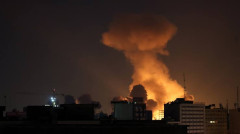
On Saturday morning, when Israeli bombs fell on Iran's Supreme Leader's residence in Tehran, Ayatollah Ali Khamenei was meeting there with several of his top advisers, Axios writes. He did not expect it to happen.
"The joint American-Israeli operation that killed Khamenei was the culmination of two months in which President Trump simultaneously pursued diplomacy and war. On Friday, he chose war," the outlet emphasizes.
According to the article's authors, journalists Barak Ravid and Marc Caputo, the crisis — which began with a popular uprising in Iran in late December — was quintessentially Trumpian: full of unexpected twists, last-minute changes, and deliberate disinformation.
"Ultimately, the uncertainty itself became a strategic advantage, leaving Iran's leadership vulnerable to the largest air attack ever conducted by the Israeli military," the outlet writes.
The groundwork for Saturday's operation was laid in late December, when Israeli Prime Minister Benjamin Netanyahu visited Trump at Mar-a-Lago. Protests against the regime in Iran had just begun, and it was not yet clear how significant they would become. Netanyahu used the meeting to discuss next steps following the previous year's joint strikes, which had primarily targeted Iran's ballistic missile capabilities and were tentatively planned for around May. Within days, the calculus had shifted.
On January 14, Trump came close to ordering a strike but changed his mind. Instead, he ordered a massive military buildup in the Middle East and began secretly planning a joint operation with Israel.
Over the following weeks, the Mossad director visited Washington DC twice, followed by the head of Israeli military intelligence and the IDF Chief of Staff — all coordinating what would become Operations "Epic Fury" and "Lion's Roar."
At the same time, Trump was exploring whether military leverage could produce a deal with Iran on his terms.
The US and Iran met in Oman in early February for the first time since the 12-day war in June of last year. Days later, Netanyahu urgently traveled to Washington to discuss US "red lines" in the negotiations and whether the US and Israel would launch a joint military operation if talks failed. From the outset, Trump's envoys Jared Kushner and Steve Witkoff were skeptical about the chances of a deal, but three US and Israeli officials stressed that the Geneva nuclear talks were not entirely a ruse from the beginning.
According to a US official, Trump wanted to try to reach an agreement, and the Iranians were told unambiguously that military strikes "will happen if we don't see real progress on a real deal very quickly."
A week before the Geneva meeting, the US and Israel agreed on a potential strike date — the coming Saturday, when Khamenei would hold his regular meeting with his top aides at his government complex.
But they faced a specific challenge: keeping Khamenei from suspecting anything and retreating to his underground bunker. An Israeli intelligence official said an Axios article mentioning the possibility of an assassination attempt on Khamenei caused concern among the military, but the Iranian leader did not change his plans.
When Kushner and Witkoff traveled to Geneva on Thursday, they already suspected there would be no deal, but held the meeting anyway — maintaining Iran's belief that diplomacy was still alive.
"One of the rules of deal-making is that you have to figure out very quickly whether there's a deal to be made or not," said a US official. The Iranians in the room were nowhere near understanding even the most flexible US position, the outlet reports.
After the first session, Kushner and Witkoff called Vice President Vance on a secure line and told him the gaps remained large. A second round that evening changed nothing.
"Kushner and Witkoff concluded that the Iranian proposal was total nonsense and was made only to buy time," said a senior US official. "There was no 'there' there to work with," he added. Another official characterized Iran's strategy from the start as "games, tricks, stalling tactics."
"We reported this to the president, and obviously he weighed the various options," the official said.
US officials said there were three areas where they could not reach agreement with Iran. The US offered Iran free nuclear fuel for its civilian nuclear program indefinitely in exchange for abandoning uranium enrichment. The Iranians refused. "That was very significant," said one official.
The Iranians also refused "in all instances" to discuss their missile capabilities. "We cannot continue to live in a world where these people have not only missiles but the ability to produce 100 of them a month on an ongoing basis to overwhelm any potential defense," said one official.
Iran also refused to stop "funding militant groups across the region that the US and Israel say have destabilized the Middle East for decades."
Before and during the talks, US officials said intelligence made clear that Iran was already rebuilding nuclear facilities that Trump claimed were "destroyed" in Operation Midnight Hammer in June of last year.
When Kushner and Witkoff asked for a concrete proposal, the Iranians presented a seven-page document outlining enrichment needs they claimed were for civilian purposes. Trump's team checked the figures against the UN nuclear program. "It would have resulted in roughly five times the enrichment capacity provided for in the [2015 nuclear deal]," said one official. Officials also said Iran had been secretly stockpiling enriched material at the Tehran Research Reactor under the guise of medical research. "They haven't used that fissile material to produce a single medicine," said one official. "It was all done to deceive."
The authors note that this information is based primarily on statements from US and allied officials made after the strikes and cannot be independently verified.