make preferable
Tehran has further isolated itself by attacking Gulf countries and created hostility with its neighbors that will persist even after the war ends, Anwar Gargash, diplomatic adviser to the President of the United Arab Emirates, said.
Earlier, the UAE said it had intercepted three waves of Iranian missiles in its airspace, describing the attacks as a “violation of sovereignty and a dangerous escalation threatening regional security,” according to state news agency Emirates News Agency.
“The decisions of Iranian leaders have deepened Iran’s isolation in response to Israeli and American strikes,” Gargash said. “Iran needs the Gulf states to prevent the prolongation and expansion of this war.” He added that Tehran’s “short-sighted” attacks could create long-term hostility and distrust with neighbors. “This will cause damage that extends beyond the war in our relations with Iran,” he noted. “The UAE will not stand idly by in the face of Iranian attacks and will consider its options.”
Gargash stressed that the government’s priority is protecting the UAE and its residents. “We are in good shape with ready emergency plans; our air defense systems have done an excellent job. We will continue to protect the UAE and everyone who lives here,” he said.
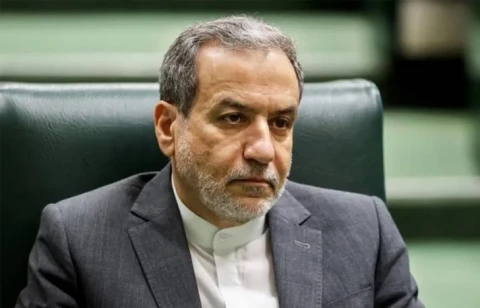
For his part, Iranian Foreign Minister Abbas Araghchi said he had contacted regional counterparts after the attacks to clarify that Iran was “exercising its right to self-defense,” adding that it was “regrettable that the targets were located in friendly states.”
Gargash described Iran’s motives for attacking Gulf countries as “unconvincing” and “unreasonable,” saying Tehran had crossed a red line by violating Gulf security. “We cannot accept Iran’s justifications, which are unconvincing,” he added. “They were not convincing during the 12-day war and they are not convincing now.”
He noted that Gulf states had publicly and privately sought a diplomatic solution between Washington and Tehran and played a key role in efforts to avoid confrontation. “We did not support the choice of war,” he said. “Despite our differences with Iran, we are neighbors and chose the path of peace and dialogue because the region cannot afford new conflicts.”
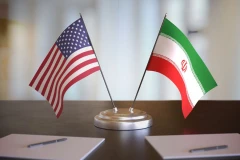
The UAE has said it would not allow its airspace or territory to be used for attacks on Iran and has repeatedly called for de-escalation and dialogue to ease tensions between the United States and Iran. Gargash said Tehran had violated a “gentlemen’s agreement” among neighbors that implied non-use of Gulf territories for attacks in exchange for a policy of non-aggression.
“We are extremely disappointed and condemn Iran’s expansion of this conflict by involving neighbors who worked very hard to prevent this moment,” Gargash said.
He added that the “anticipated escalation,” building for weeks, stemmed from unresolved crises fueled by the lack of proper dialogue on the nuclear issue. “There is no alternative to a political solution,” he said.
The UAE official called on the warring sides to “return to the negotiating table,” stressing that the current hostilities “are not part of the solution, and a return to negotiations is critically important.”