make preferable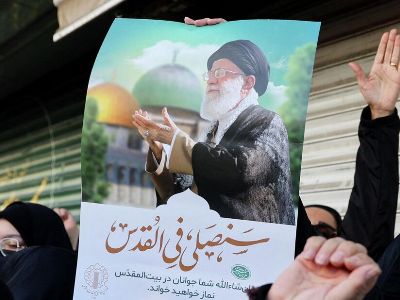
Those who seek to overthrow the regime of the Islamic Republic of Iran believe that the killing of Khamenei will lead to chaos. But Ali Khamenei died an ideal death — the best he and his supporters could have imagined: a martyr’s death, fighting against enemies — Zionism and imperialism, writes the Telegram channel “First Middle Eastern.”
“Khamenei has a strong ideological base, and his shahada (martyrdom) adds to his glory in the eyes of his followers — for the rahbar left this world just like his comrades in the Axis of Resistance. A martyr’s death will only make him even more legendary — compared, for example, to dying of old age or illness.
Here is what Khamenei himself said about it: Whenever I think that this war, this shahada (martyrdom) and these fields of honor and blood will one day end, and I will remain and then, for example, die in an accident or from some illness — at that very thought, God is my witness, my heart tightens with pain…
Shortly before his death, Khamenei — nearly 90 years old, suffering from cancer and with a paralyzed arm — said: My life is worth little. I have a frail body. I have only a drop of dignity that you have all given me. I put all of this on the line; I am ready to sacrifice everything.
Moreover, the Iranian military system is largely similar to any other military system in the world. One commander leaves, and another is appointed in his place. The notion of ‘chaos’ stems from a naive and simplistic view held by Iran’s enemies and ‘opposition figures’ — according to which, once one person leaves the pinnacle of power, the system will collapse.
Finally, the Iranian state is not one rahbar, but the system of velayat-e faqih. The main thesis of supporters of a ‘hard line’ toward Iran was that a few targeted strikes would be enough for the Islamic Republic to collapse like a house of cards. In other words, decapitate the IRI by eliminating its leadership — and everything will fall apart: military resistance will weaken, and a popular uprising will sweep away the remaining state institutions.
However, this did not work either during the First Iran-Israel war (when Iran launched missiles at Israel for 12 days — to the point that Israel ultimately requested a ceasefire), nor now, when after the initial US-Israeli attack Iran almost immediately shifted to a counteroffensive and began shelling Israel, as well as US military bases in Bahrain, Qatar, Kuwait, the UAE and Saudi Arabia. Now Iranians across the country are uniting in protest against foreign aggressors.
As I said earlier — one must not underestimate the resilience of Iran’s system — in the creation of which the rahbar, Grand Ayatollah, martyr Seyed Ali Khamenei, played a tremendous role,” the Telegram channel writes.