make preferable
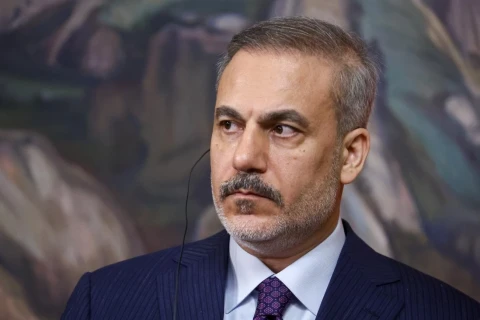
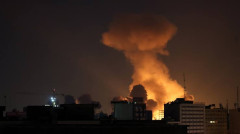
Turkey spent four years winning against Iran. In Syria, the Caucasus, Iraq, and on the Kurdish question, Ankara gained ground in every theater where Tehran was losing it. The strategy required a specific kind of adversary: one weak enough to lose proxy contests, coherent enough to hold its own borders. Saturday’s strikes may have incapacitated that adversary. President Recep Tayyip Erdoğan called them "deeply disturbing." Foreign Minister Hakan Fidan worked the phones within hours — Iran, Iraq, Saudi Arabia, Egypt, Indonesia. Turkey declared it is "not on the side of any country in this conflict." Every word is scripted. The question is not what Turkey said — it is what Ankara does when the rival it needed is gone, Forbes writes.
Of all the regional actors watching Tehran this weekend, Turkey stands apart. Not because it has the most to lose — Iraq's exposure is arguably deeper, its Shia political architecture, PMF networks, and energy dependency all directly threatened. Turkey stands apart because no other state has the same depth of contact with what remains inside Iran.
The Turkish-Iranian border is the oldest continuously managed frontier in the Middle East — drawn in 1639, survived the collapse of both empires that created it, reinforced by every regime change in Tehran since. The structural logic never changed: rivalry managed through a shared interest in Kurdish containment. That logic held through the Shah's fall, the IRGC's rise, and a decade of proxy competition across Syria and Iraq. It produced something no other bilateral relationship in the region offers — not trust, but infrastructure.
That infrastructure is what matters now. Fidan’s intelligence services have cultivated contacts across multiple tiers of the IRGC — relationships built over a decade running MIT that no other NATO foreign minister possesses. Turkey hosts one of the largest Iranian diaspora communities outside Iran, and its deep ties to Iran's 12–20 million ethnic Turkic population in the northwestern provinces closest to the border give Ankara channels into Iranian society that satellite imagery cannot provide. And on the Kurdish question — the variable that has bound these two states together even when everything else pushed them apart — Turkey's own evolving domestic process means Ankara approaches this crisis with different options than it had five years ago.
Four Theaters, Four Years — Turkey’s Controlled Burn
Call it a controlled burn, a long game, played quietly across four boards simultaneously.
In Syria, Ankara backed the coalition that produced Hayat Tahrir al-Sham and the fall of Assad in December 2024. Iran had spent a decade and billions of dollars securing Assad’s government and, with it, the land corridor to Hezbollah. Both are gone. Turkey now anchors Syria’s security architecture and leads its reconstruction framework. In the Caucasus, Turkish Bayraktar drones and military advisers helped Azerbaijan capture Nagorno-Karabakh in 2020 — collapsing Iran’s quiet balancing strategy in the South Caucasus that had kept Azerbaijani-Turkish connectivity ambitions in check. In Iraq, the Development Road Project — a multi-billion dollar corridor from the Gulf to Europe through Ankara, signed with Baghdad, Qatar, and the UAE — rewired the region’s trade geometry around Turkish interests. And the Kurdistan Workers Party (PKK) ceasefire and Abdullah Öcalan's dissolution call in February 2025 removed Turkey's principal internal security vulnerability — the one that Iran and its proxies had exploited as leverage against Ankara for three decades.
Four theaters. Four years. Ankara gained ground in each one.
But the operative word is gained — not secured. Each of these advances was built on a particular assumption: that Iran would remain coherent enough to hold its eastern borders, manage Kurdish movements in its northwest, and supply energy through functioning infrastructure — just weak enough to keep losing proxy contests. Turkey was not trying to destroy Iranian state capacity. It needed it. A functional Iran on Ankara's eastern flank, even a rival one, was the condition that made every other Turkish advance manageable.
"Turkey’s relationship with Iran is very structural and stable," says Harun Önder, Director of the Conflict and Development Program at Texas A&M University. "Ankara can work with any Iranian government that does not regionally overreach." That sentence captures the logic precisely. Turkish-Iranian rivalry has never been existential. It has been competitive — a managed contest between two states that share a border, energy infrastructure, and a common interest in containing Kurdish political autonomy aspirations. The contest was producing results on Turkey's terms.
Then Saturday rewrote the equation.
The Kurdish Constant: The One Variable That Never Changes
Before analyzing what Turkey will do, it is worth establishing what Turkey will not compromise — regardless of which scenario unfolds in Tehran.
Across fifteen years and every regional crisis Ankara has navigated — Syria, Iraq, Libya, Azerbaijan, Egypt, the Balkans, Qatar — every Turkish foreign policy calculation has passed through a single filter first: does this strengthen or weaken Kurdish political-military capacity on Turkey's borders? This is not a priority among others. It is the organizing logic around which everything else is arranged. Energy security, refugee management, mediation positioning — all are important. All are secondary.
PJAK — the PKK's Iranian affiliate — is the one Kurdish armed organization that has maintained a significant operational presence inside Iran itself. Between 2014 and 2025, it accounted for an estimated 70 percent of Kurdish attacks on Iranian forces, and roughly 80 percent of IRGC fatalities in those engagements — all while maintaining a formal ceasefire with Tehran. The Coalition of Political Forces in Iranian Kurdistan announced its formation on February 22 — six days before today's strikes — uniting PJAK with four other Iranian Kurdish parties under a joint command structure. Kurdish political actors were already moving to fill Iranian governance vacuums before the Iranian government was formally gone.
But the Kurdish calculus inside Iran is not identical to the one Turkey has spent decades managing on its own soil. The PKK announced in May 2025 that it would dissolve itself and end its armed struggle. PJAK announced it would not follow that decision. That divergence matters. Turkey's domestic Kurdish process — if it holds — could give Ankara a diplomatic opening with Iranian Kurdish actors that a purely security-first posture never would. A Turkey that has resolved its own PKK conflict carries a different message to PJAK's coalition partners than a Turkey still fighting one. Whether Ankara chooses to use that opening depends on which instinct wins: the old reflex to treat all PKK-adjacent movements as existential threats, or the newer recognition that Kurdish political organization in Iran could be managed rather than suppressed.
A weakened Iran maintained that border. A leaderless one does not. But what fills the vacuum depends partly on whether Turkey arrives as a security guarantor or as another adversary.
The Playbook — And Where It Was Built
Turkey’s response to Iran's leadership vacuum will follow a pattern refined across every major regional crisis since 2011.
The playbook runs three sequential moves. Public condemnation comes first — not because Ankara objects to the strategic outcome, but because Erdoğan’s AK Party-MHP coalition base requires it. The condemnation of the strikes and the simultaneous condemnation of Iran's retaliatory attacks on Gulf states, delivered in the same address, is the signature Turkish move: strategic ambiguity maintained at maximum value. Every actor needs Turkey more when they cannot be certain of its alignment.
The back-channel activation comes second. Foreign Minister Hakan Fidan spent a decade as head of MIT building operational contacts across the IRGC's second tier that no other NATO foreign minister possesses. His call to Iranian Foreign Minister Araghchi within hours of the strikes was not condolence diplomacy. It was a signal: Turkey's channel to Tehran remains open regardless of who answers. Whoever consolidates power in Iran over the coming weeks will receive the same message Turkey delivered to Baghdad's PMF leadership in 2024: manage the Kurdish border, and Turkey manages the relationship.
The economic positioning comes third, and it moves faster than most observers expect. Turkish infrastructure firms began positioning for Syrian reconstruction contracts within weeks of Assad's fall. The same calculation applies to Iran. Turkey's Development Road corridor gains strategic value in every Iranian disruption scenario as an alternative transit architecture to Iranian routes.
But the playbook was built for a scenario Iran has now exited.
The Real Question: Can Turkey Execute?
Turkey's preferred outcome is IRGC consolidation — a pragmatic security government in Tehran that Fidan's network can transact with, that maintains border security, and that renegotiates the gas supply contract expiring in mid-2026 on functional terms. That preference was realistic before Saturday. After three rounds of strikes against Iran's command structure over nine months, the IRGC bench is thin enough that consolidation is no longer the most likely single outcome — only the most desirable one from Ankara's vantage point.
If Iran fragments instead, Turkey faces a more expensive problem. The Syrian template activates — MIT operations, proxy insertion in northwestern Iran to deny PJAK organizational space, drone strikes against PKK logistics infrastructure in the Zagros — but Iran is not Syria. IRGC provincial units remain functional even in a fractured succession scenario, and they retain retaliatory capacity. A Turkish security operation in northwestern Iran carries escalation risks that four operations in Syria never did.
Three risks from Iranian leadership collapse that Turkey's playbook cannot fully hedge.
The energy exposure is immediate. Iran supplies 15–16 percent of Turkey's natural gas through a pipeline whose contract expires mid-2026. Pipeline supply still dominates Turkey's overall import mix despite years of LNG diversification. BOTAŞ can activate emergency spot contracts. The transition period costs real money against an economy already managing 45 percent inflation.
The refugee exposure is politically existential. Turkey hosts close to three million Syrian refugees — a weight that already defines domestic politics and places a hard ceiling on public tolerance for further displacement. A 3–5 million wave from Iran does not strain Turkey's public services. It potentially fractures the political coalition that governs it. Turkish Foreign Ministry officials briefed Parliament on tiered contingency plans in January — including the option of establishing a buffer zone on Iranian soil to keep displaced populations from reaching Turkish territory. That option is now closer to active planning than contingency.
The Azerbaijani wildcard is the one neither Turkey nor any analyst has cleanly resolved. The 12–20 million Azerbaijani Turks living in Iran's northwest are leverage when Iran has a functioning government. If Iran's governance collapses, they become a potential mass movement toward Turkey's border — generating domestic pressure to admit ethnic kin that Turkish public sentiment demands and Turkish strategy cannot afford. There is no playbook entry for that dilemma.
The Script And What Comes After
Turkey's Interior Minister called counterparts in Azerbaijan and Iraq within hours of the strikes. Both share a border with Iran. That coordination is not protocol. It is the beginning of the architecture Turkey will need if Iran's eastern provinces deteriorate. Erdoğan confirmed border security remains stable for now — "The police, gendarmerie and intelligence services are taking all necessary measures" — language that is simultaneously reassuring and a reminder that stability requires continuous maintenance.
The script Turkey delivered Saturday was written for a manageable rival. Publicly neutral, privately positioned, mediation on offer, Kurdish containment demanded quietly. That script has served Ankara well across four theaters and four years.
What unfolds in Tehran over the next thirty days will determine whether the same script still applies — or whether Turkey finds itself navigating something its playbook was never designed for: not a rival losing ground on Ankara's terms, but a state losing its footing on everyone's terms at once.
The long game just got considerably shorter.