make preferable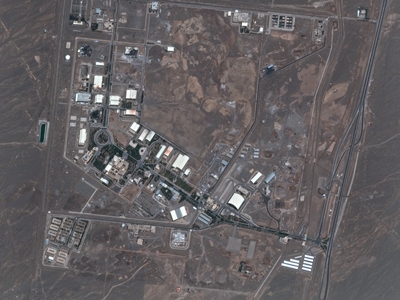
As of Monday evening, the extent of new damage inflicted on Iran's nuclear facilities during the current military conflict remains unclear, due to contradictory statements from the IAEA, Iran, Israel, and the US, the Jerusalem Post reports.
On one hand, reports emerged Monday evening that the US had allegedly struck a major Iranian nuclear facility in Isfahan, where IAEA Director General Rafael Grossi said uranium enriched to 60% may be stored. On the other hand, there was no confirmation, and prior to that strike it had remained unclear during the first three days of the conflict whether nuclear sites had been targeted at all.
Earlier Monday, Grossi told the IAEA Board of Governors that there was currently no evidence that the US or Israel had struck any Iranian nuclear facilities in the current war. "As for the state of nuclear facilities in Iran today, we have no indication that any nuclear facilities, including the Bushehr nuclear power plant, the Tehran research reactor, or other fuel cycle facilities, have been damaged or struck," Grossi said.
Israel has repeatedly declined to specify which nuclear facilities it may have targeted, though such sites were named during the war with Iran in June of last year. Similarly, the US published lists of its targets, but nuclear facilities were not among them.
Later Monday, Iran's ambassador to the IAEA stated that the Natanz nuclear facility had been struck during US and Israeli military operations. "They again attacked Iran's peaceful, safeguarded nuclear facilities yesterday," Reza Najafi told journalists at the Board of Governors meeting, identifying Natanz as the site that was hit.
Grossi noted that most data on the condition of nuclear facilities in Iran comes from technological devices monitoring radiological changes, such as toxic nuclear material leaks into the atmosphere — none of which have been detected. He also clarified that since June 2025, following Israeli and US strikes on Iranian nuclear sites, his staff had had no access to the central facilities — Natanz, Isfahan, or Fordow. When asked directly about reports that Isfahan had been struck, he said he had no direct access to the facility.
Grossi also suggested that most of the uranium enriched to 60% likely remains deep underground in Isfahan and has not been destroyed — either in June 2025 or during the current conflict.