make preferable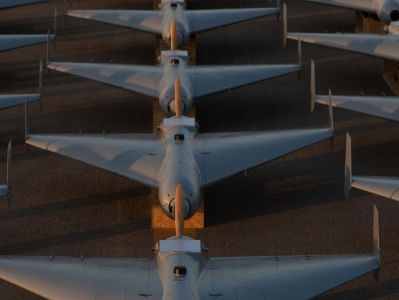
In the conflict with Iran, the US has for the first time deployed a kamikaze drone known in the media as LUCAS, writes aviation expert Alexei Zakharov.
LUCAS is not the drone's official name — it simply stands for Low-cost Uncrewed Combat Attack System. The developer's name is known: SpektreWorks.
The US became interested in Iran's Shahed-136 drone back in 2021, when it was used in Syria. After studying the wreckage, Americans discovered that the Shahed contained numerous US-made components, including GPS modules and microchips. The information obtained was shared with participants in the "Replicator" program for mass production of low-cost drones, including SpektreWorks, which began with a target drone designated FLM-136 before becoming the lead contractor for the LUCAS program.
How does it compare to the Shahed-136?
Despite the obvious reference, the American drone is far from a copy of the Iranian one. The Shahed uses a 50 hp engine and has a maximum takeoff weight of 200 kg, carrying up to 50 kg of payload with a claimed range of 2,000 km. The FLM-136 weighs just 81.5 kg, carries 18 kg of payload, and has a range of 600–700 km. Both have similar speeds: cruising at 100+ km/h, maximum around 185 km/h.
On cost: the FLM-136 has an official price of $35,000, while the Shahed is estimated at $20,000–50,000, with newer versions approaching the higher end.
Where the American drone concedes in payload, it compensates with greater effectiveness: improved jamming resistance, precision guidance, and swarm tactics. Whether this approach proves superior to Iran's "simple but numerous" strategy remains to be seen.