make preferable
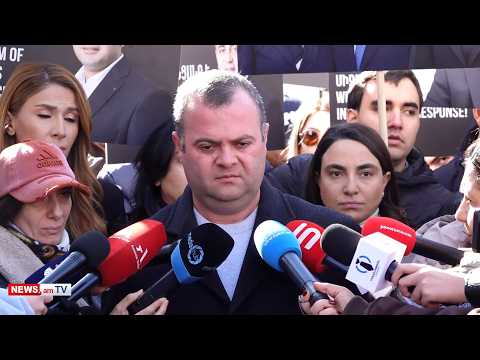
The investigation has no facts about the “crimes committed by Robert Kocharyan”; it is exclusively about conclusions and assumptions. Aram Orbelyan, the lawyer Armenia’s second President Robert Kocharyan, on Wednesday stated this at a press conference.
According to the attorney, Kocharyan is accused only of signing government decisions, whereas everything else is conclusions and assumptions. Orbelyan noted that similar charges had been brought also against the late Prime Minister Andranik Margaryan.
Referring to the charges brought against the second president’s son, Sedrak Kocharyan, Orbelyan recalled that the privatization process began in Armenia in the early 1990s and continued during the first, second, and third presidents’ terms of office. As per the attorney, in 2011, Sedrak Kocharyan was already a mature man and businessman, had never been involved in politics, and Robert Kocharyan had not been president for several years.
According to Orbelyan, no matter what property Sedrak Kocharyan acquired, the investigation could have made the same unfounded claims, linking government decisions with the acquisition of property years later.
“Episodes are described in vivid colors that Robert Kocharyan has no connection with and for which he has no opportunity to obtain documents,” the lawyer noted, and added that such an approach by the investigation leads to periodic criticism by the European Court of Human Rights.
“From the beginning, they have decided that Robert Kocharyan is guilty. Moreover, they have decided that the [Armenian] people had decided that he is guilty. And he is guilty because he lives well. I quote: ‘Why don’t my children have, while his children have?’ It is a very ‘weighty’ argument.
The problem is that if we do not respect constitutional relations, changing the constitution [of Armenia] will not yield results. The prosecutor cannot discuss the government’s decision. The government’s decision can be discussed by the Administrative Court or the Constitutional Court. The actions of a member of the government can be the subject of investigation by the prosecutor’s office, but it cannot be said that the ratification [by Kocharyan of the government’s decisions] was illegal. The prosecutor’s office has no right to make such an assessment,” Orbelyan said.
Turning to the question of how Robert Kocharyan, being in freedom, could hinder the investigation, the attorney sarcastically noted that not illegal actions were described, but conclusions arising from the president’s constitutional duties. Therefore, according to Orbelyan, Kocharyan could hinder the investigation only by somehow influencing the investigators’ thoughts, directing them in a different direction, or presenting them with a logic textbook so that their conclusions would be more logical.