make preferable
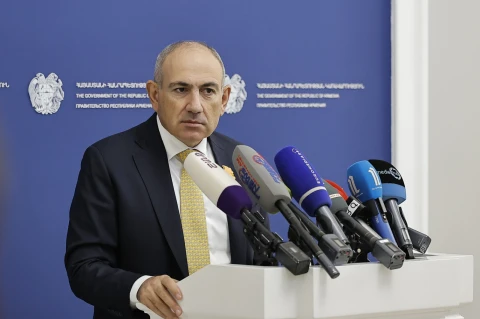
In fact, the question is not whether Armenia leaves or will leave the CSTO or not. In fact, the question is whether the CSTO leaves Armenia or not. Because I will not hide it, I will say it straight: there are many experts in Armenia, independent experts who regularly send me reports that these processes show that the CSTO is exiting Armenia, Pashinyan said in an interview with Agence France-Presse.
“Moreover, there are many experts whose assessment is that Russia is exiting the region. This may seem like a science fiction, but unfortunately, our people have seen this in history. After all, a consequence of what was the 1915 genocide of the Armenians, when Russia essentially had to exit the conflicting region under its domestic burden? And the Armenians, that had made a clear geopolitical choice, were left to face Turkey. And naturally, this analysis has intensified because of an event that recently happened in Russia, an even that we all know very well. True, it lasted one and a half days, but dozens of analytical statements were sent to me during the one and a half days, saying that this is the 1915 scenario.
1915, 1917, 1918 – years of instability in Russia, Russia having to withdraw from the region and the genocide carried against the Armenian people. But now the problem is that in 1915 the Armenian people did not have a state, a statehood that would have the obligation of safeguarding its own people. Now the Armenians have a state, and the policy of the state must be built in accordance with this logic, because the likelihood that one day we will see Iran or Turkey leaving this region is zero, there is no such likelihood, but the likelihood that any geopolitical center which is currently present here, we may wake up one morning and find they have left, that likelihood is greater than zero, not necessarily with the intention of doing harm, not necessarily with the reluctance to carry out their obligations towards anyone, including Armenia.
I repeat, this is not a current day problem, not a problem of the last 10 or 30 years. This is the problem of the last 100, 150 years. And today our situation is very challenging, very difficult, but unlike 100 and more years ago, we currently have a state, which is considered a democratic state, which is considered a developing state, which is considered developing, which is considered capable of negotiating. We have a chance to understand the risks and manage them. However, we need to understand them, which is not going to be easy,” he said.