make preferable
During his roughly 20-hour stay in Yerevan, Canadian Prime Minister Mark Carney will have only a brief window to engage with Armenia’s political leadership before the start of the European Political Community summit, to which Canada has been invited as an honorary guest, senior parliamentary bureau reporter for CBC in Ottawa Raffi Boudjikanian writes for the Canadian broadcaster.
According to the author, Carney is expected to meet with Armenian Prime Minister Nikol Pashinyan just a few hours after arriving at Zvartnots International Airport, but the rest of his agenda will be focused mainly on European leaders.
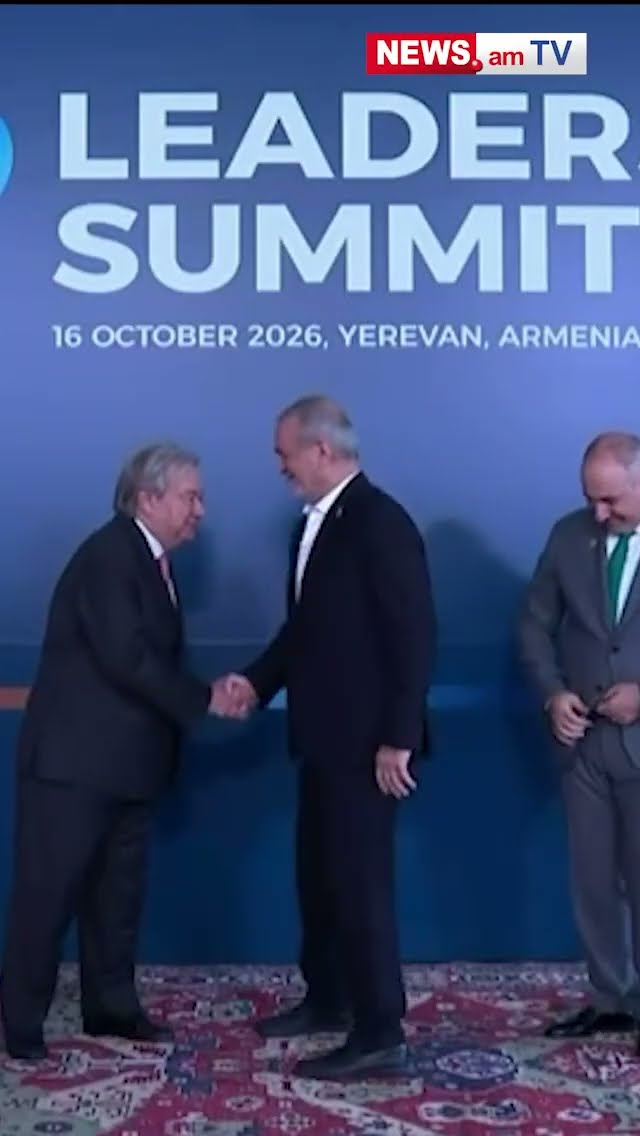
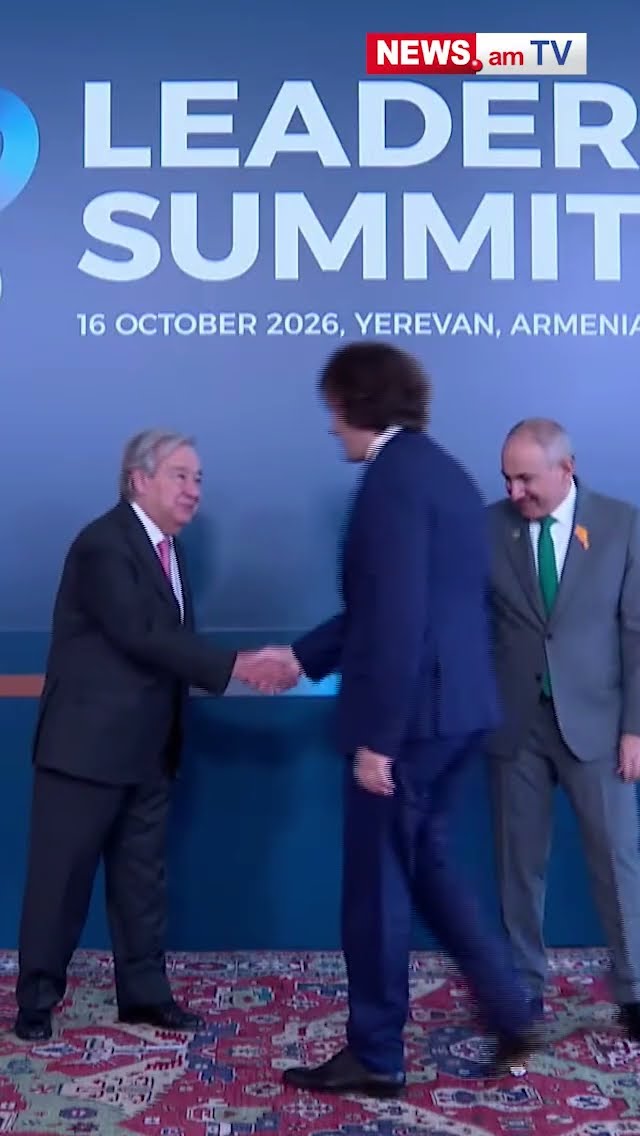
The European Political Community summit is a twice-yearly event that brings together members of the European Union as well as some neighboring countries on Europe’s periphery in Asia. The first meeting took place just a few months after Russia’s invasion of Ukraine. Ukrainian President Volodymyr Zelensky is expected to attend the current summit.
“At the summit, the prime minister will meet with European leaders to strengthen collective security and transatlantic defense readiness, as well as to advance support for Ukraine,” a statement from Carney’s office said shortly before the trip.
Much of the statement was devoted to Canada-EU relations. It quoted Carney as saying: “Canada is growing closer to our European partners and allies. United by shared values, we are expanding cooperation in defense, energy and technology to build a safer and more prosperous future on both sides of the Atlantic.”
However, Canada has also been deepening ties with Armenia in recent years. Carney’s predecessor Justin Trudeau became the first Canadian prime minister to visit the country when he traveled there in 2018 for the Francophonie summit. In 2023, Ottawa opened a Canadian embassy in Yerevan, and Canada even became the first country outside the EU to join the European Union Mission in Armenia, a civilian monitoring mission created to observe the Armenian-Azerbaijani border after the bloody territorial war between the two countries over Nagorno-Karabakh in 2020.
Regional experts told CBC News that Ottawa should also focus on further deepening those relations.
Armenia’s “strategic” neighborhood
Christopher Waters, a professor of international law at the University of Windsor, said Armenia’s geographic position should make it a country of significant interest to Canada.
“There are good conditions for expanding student exchanges and economic ties. Canada can benefit from having an ally and a friend in a complex region — a region that is increasingly looking to the West, looking to Canada and its allies, looking to Europe in order, frankly, to leave the Russian sphere of influence,” he told CBC News.
“This turn to the West has been a declared goal of Pashinyan since he came to power in Armenia in 2018, and it accelerated after Armenia lost the above-mentioned war with Azerbaijan and accused Moscow of failing to come to its aid.
Nagorno-Karabakh — a territory long recognized as part of Azerbaijan under international law but historically populated mainly by ethnic Armenians — returned fully to Baku’s control in 2023 after an artillery campaign that caused most of its 120,000 residents to flee to Armenia as refugees, while the internationally unrecognized government of the region ceased to exist,” Boudjikanian writes.
Many of the leaders Carney hopes to meet in Yerevan represent countries that are part of the European Parliament, which this week triggered a diplomatic conflict with Azerbaijan by adopting a resolution calling for the right of return for Armenians who left Karabakh, as well as the release of political prisoners held by Baku.
Against the backdrop of the election campaign and efforts to build relations with Azerbaijan as part of a fragile peace process, Pashinyan has largely avoided public comment on these issues, as well as on the destruction of an Armenian church in Karabakh — the latest such incident. However, Waters said that silence should not prevent Canada from speaking out on these issues.
“Canada could exert pressure on Azerbaijan as an honest broker in the region,” he said.
“There are certain areas where it is very difficult politically for Canada or like-minded states to intervene.” Waters pointed in particular to border disputes between the two countries. “These are interstate issues that must be resolved between Armenia and Azerbaijan,” the expert emphasized.
However, according to Waters, humanitarian issues and calls to protect cultural heritage should not be regarded as interference.
“There are humanitarian steps that can be taken multilaterally, bilaterally, and sometimes openly,” he said.
Last summer, still under Trudeau, Canada called for the release of political prisoners, as well as for ensuring refugees’ right to return. However, the Canadian government was also criticized during the 2020 war over parts manufactured in Ontario that were alleged to have ended up in Turkish drones later sold to Azerbaijan and to have played an important role on the battlefield.
Turkey and Azerbaijan rejected those allegations, although they prompted Canada to temporarily suspend military exports to Turkey.
As part of more recent developments in the region, the Armenian government last year arrested several religious figures whom it accused of plotting a coup against Pashinyan, including Bagrat Galstanyan — a clergyman with Canadian citizenship linked to one of the opposition parties running against him. At the time, Canada’s foreign ministry told CBC News that it was in contact with local authorities, but provided no further details, citing privacy considerations.
An opportunity to expand defense ties
Defense and military experts said Canada could also deepen engagement with the Armenian armed forces.
Alan Whitehorn, professor emeritus at the Royal Military College in Kingston, noted that Canadian instructors could cooperate with Armenian military academies to support modernization.
“First, we are a respected middle power. And second, I believe we have a good system of military education, especially at the level of senior military colleges. And I think that is a good example for Armenia,” he said.
Armenia participates in NATO’s Defence Education Enhancement Programme (DEEP), which is designed for countries outside the alliance and aims to “provide tailored practical support for the development and reform of professional military education institutions.”
According to Whitehorn, Canada already cooperates with Armenia within DEEP, but it could also develop more direct bilateral relations.
Meanwhile, the very fact that the summit is being held in Armenia is already a sign of the country’s drift away from Russia, according to Robert Huebert of the University of Calgary.
“It is also a signal to Putin, who continues to threaten NATO by saying the alliance must not move closer to his borders. And I think this is a way of showing: we can go wherever we want. I think it is also an attempt to show Putin that we have serious interests here. If people want to join efforts with us, we acknowledge that,” he said.