make preferable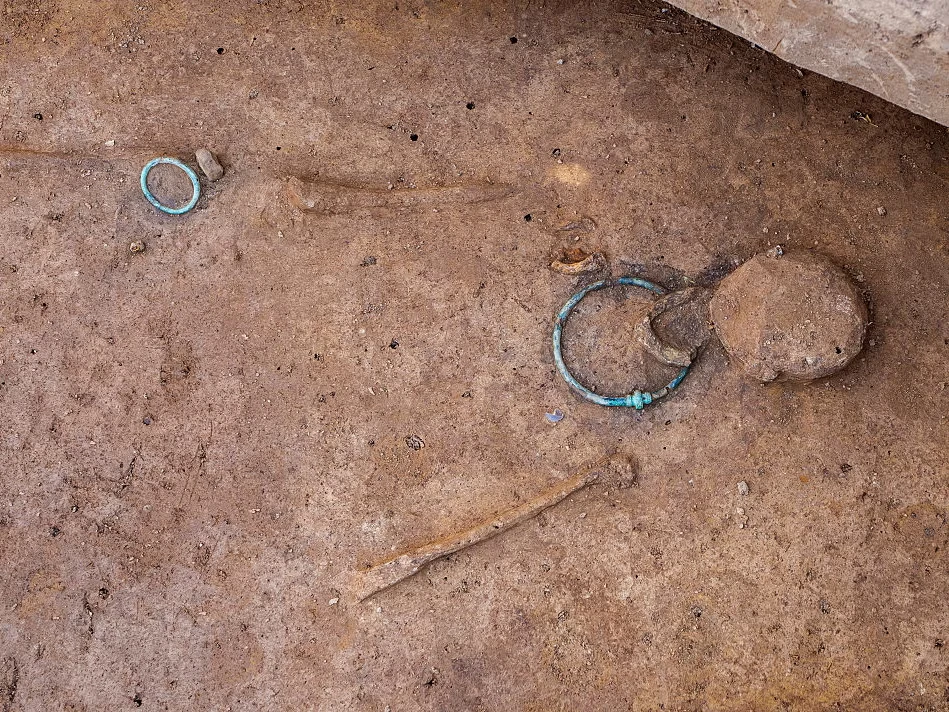
Archaeologists in Germany have discovered a 2,500-year-old tomb linked to the Celtic elite of the Early Iron Age, Popular Mechanics reports.
The find was made near the town of Bad Camberg in the federal state of Hesse during a routine site inspection ahead of the construction of a solar park next to a highway.
Although no human remains were found in the burial, rich grave goods were discovered inside, including gold ornaments and parts of a chariot. According to researchers, such finds make it possible to classify the tomb as a so-called “princely” burial.
During the two-week excavation, archaeologists uncovered a set of gold ornaments — a necklace, bracelets, and rings — as well as an imported vessel of Etruscan origin from the Mediterranean. In addition, fragments of weapons and metal parts of the chariot were found, including elements of the axles and wheel rims.
According to specialists, such chariot burials are extremely rare in the Hesse region. Researchers note that the find is comparable to well-known Celtic sites such as the burials at Glauberg, which had previously confirmed the presence of a developed Celtic elite in what is now Germany.
Archaeologists believe the discovered complex confirms the existence of an influential Celtic settlement in the region more than 2,500 years ago and makes it possible to better understand the social structure, trade links, and burial traditions of that period.
Part of the find still remains beneath a layer of soil — according to specialists, analysis using X-ray and CT scans indicates the presence of additional artifacts that have yet to be extracted and studied.