make preferable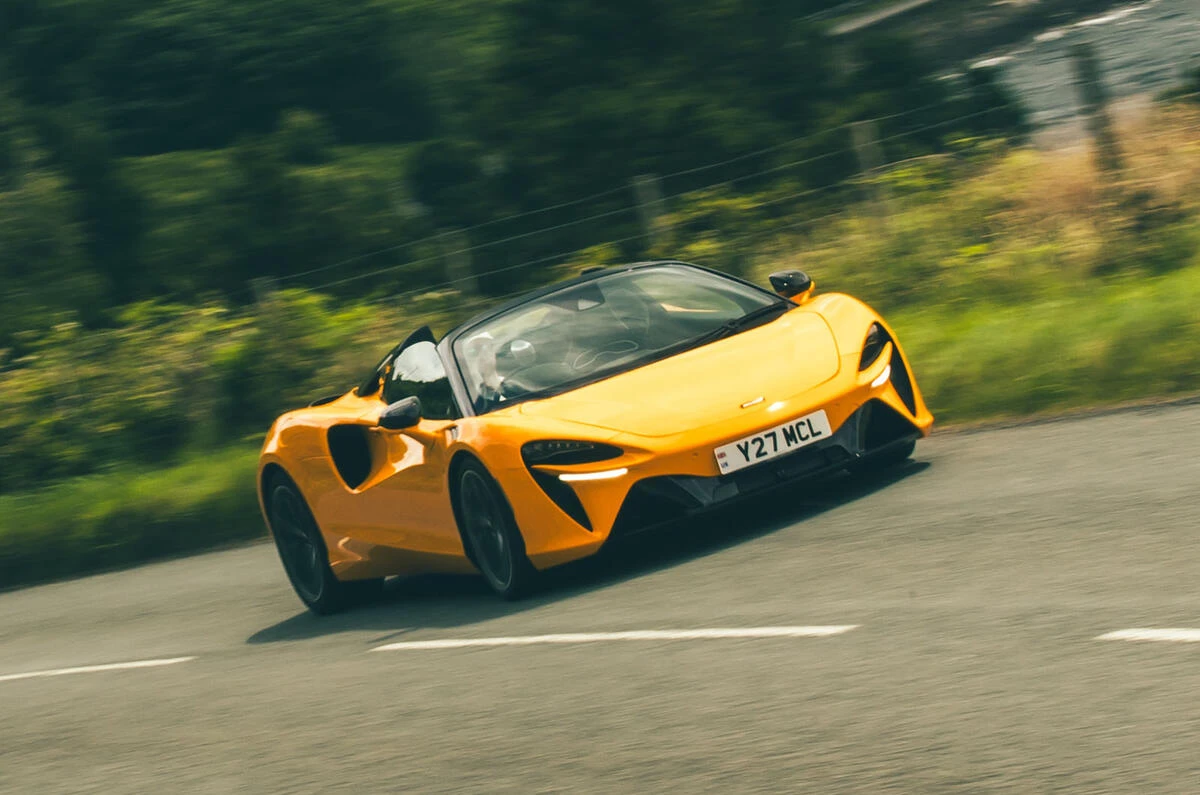
McLaren will retire its Artura and GTS over the next two years as it lays the groundwork for a new and expanded line-up of models, Autocar reports.
Accordingly, the GTS will be the first to go; production of this model is expected to end in 2027. This mid-engined two-seater with a carbon fiber monocoque was introduced in 2019 as a more spacious and comfortable alternative to McLaren's traditional supercars. The model competed, in particular, with the Aston Martin DB12 and Ferrari Amalfi.
McLaren has not yet revealed the structure of its future model range. But Autocar suggests that the front-engine architecture developed for the future crossover could be used in other models as well. In particular, the company could create a more traditional four-seat grand tourer, comparable in concept to the Bentley Continental.
The V6-powered hybrid Artura will follow the GTS in 2028, about six years after the start of its production. The model’s release was accompanied by delays due to development problems, and then production was also affected by a global semiconductor shortage. After a series of technical improvements, the Artura became one of McLaren’s core models and provides a significant share of the company’s sales.
No specific plans have been confirmed for the Artura’s successor. At the same time, McLaren has announced that it will retain the rear-engined two-seater supercars in the new generation of the model range. Also, the carmaker is developing two of its own hybrid powertrains for future models.
One of the possible new supercars, according to Automotive News, citing a McLaren dealer, may appear by 2028. The magazine claims that the car will have a hybrid powertrain with a twin-turbocharged gasoline V6 and will develop about 1085 N•m of torque. However, McLaren has not yet officially confirmed the existence of this model.
At the same time, the flagship 750S continues to be produced and is available for order, but is also approaching the end of its life cycle. The model was introduced almost ten years ago as a more powerful version of the 720S.
Recently, McLaren introduced a limited edition 788HS, designed for use on race tracks, which may indicate an early end to the production of the current supercar.
The model range update is part of a £500 million investment program announced by McLaren. The latter plans to use it to expand and develop its car range in the coming years.