make preferable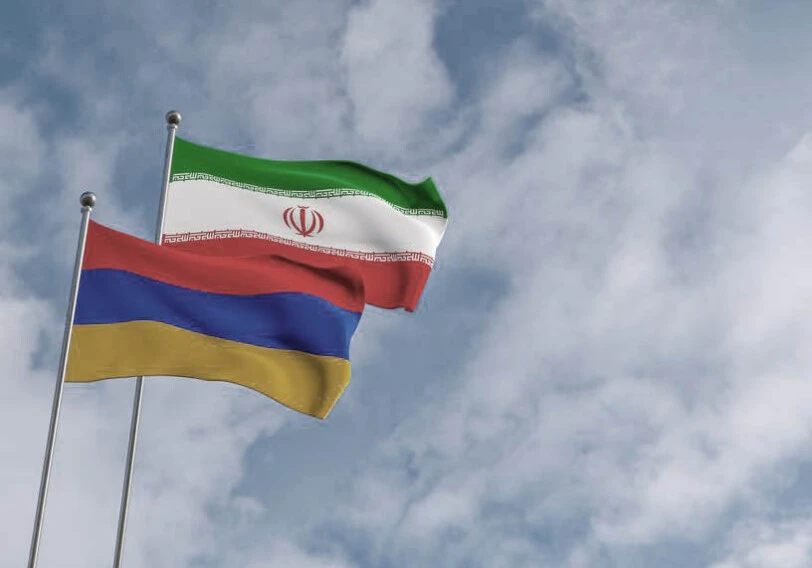
Iran is trying to redirect part of its foreign trade to the north, as the blockade of its southern ports limits the country's ability to export oil and import necessary goods. One of the alternative routes is becoming the Caspian Sea, and along with it, the importance of transport routes passing through the South Caucasus is growing, including the border with Armenia and railway communication with Azerbaijan, Al Jazeera reports.
As the author of the article—Maziar Motamedi—emphasizes, the main amount of Iran's maritime trade has traditionally passed through its southern ports. But now Tehran is increasing the use of its northern—Caspian—ports of Anzali, Amirabad, and Nowshahr. According to Iranian authorities, the share of these northern ports in the transportation of vital goods has increased from 18 percent to 30 percent since the start of the war. At the same time, however, their total throughput is significantly smaller than that of the southern ones: the north accounts for just about 30 million tons of the total nominal capacity of Iranian ports of 300 million tons.
There is also another problem: the Caspian Sea is becoming shallower. Over the past decades, its level has decreased by about two meters, and Iranian officials note that in the last two to three years it has dropped by more than 20 centimeters per year. Because of this, northern ports now accept ships with a carrying capacity of up to 4 thousand tons, instead of the previous 6 thousand.
At the same time, the load on land routes is increasing. At the Norduz border crossing between Iran and Armenia, there can be up to 1,800 trucks in queues, while at some other terminals the wait reaches 10–15 days. Experts attribute this congestion not only to cargo redirection, but also to the limited capacity of the terminals, customs procedures, the condition of the roads, and construction work.
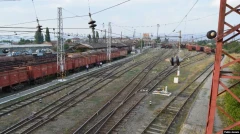
Of particular importance for Tehran is the railway connection with the South Caucasus. The railway through Julfa and Nakhchivan, which was part of the former Soviet transport network, has remained closed since the First Karabakh War in the early 1990s. Its possible restoration is linked to the Armenian-Azerbaijani peace process and the implementation of the TRIPP project. According to Vali Kaleji, an independent writer and researcher in Iran on Russia, Central Asia and the Caucasus, the lack of a railway connection with the South Caucasus remains one of the obstacles to increasing trade and transit through the western branch of the North-South Transport Corridor.
Iran is also trying to push ahead with the construction of the Rasht-Astara railway, which should connect the western branch of the North-South corridor with Azerbaijan and Russia.
However, the northern route is not able to completely replace the southern ports. One ship operating in southern Iran can potentially transport cargo comparable to the cargo of about 20 ships operating in the Caspian Sea. In addition, the northern ports do not have sufficient infrastructure and fleet to significantly increase imports.
Thus, the crisis over the Strait of Hormuz increases the importance of the Caspian Sea and the South Caucasus for Iranian trade. But at the same time, it reveals the limitations of these routes, from the shallowness of the Caspian Sea and the lack of port capacity to overloaded land border checkpoints and unfinished railway links, the author of the article concludes.