make preferable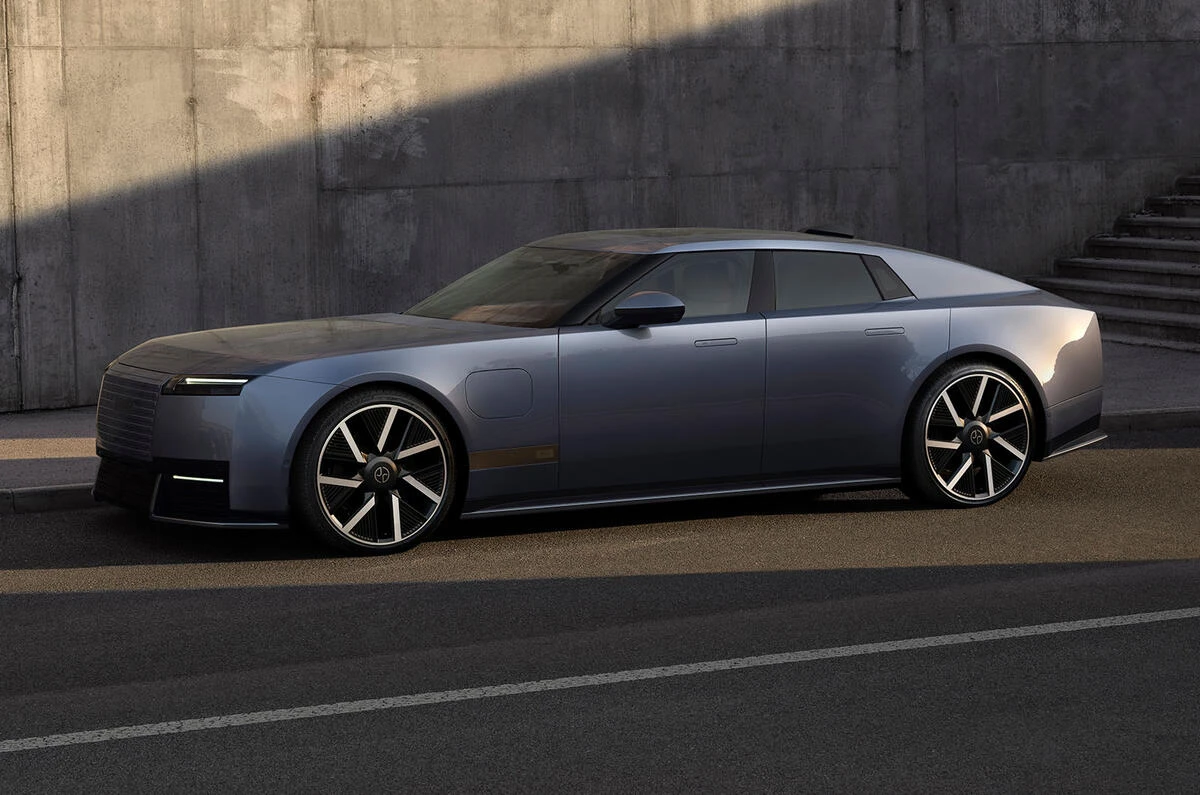
Jaguar has revealed the Type 01, the electric GT on which the UK brand's future rests, Autocar reports.
The electric GT has three engines with a total capacity of about 1,000 horsepower, an aluminum body, and a rather unusual design. Sales should start in February 2027, and the starting price will be 120,000 pounds.
Just five years ago, Jaguar's situation was extremely difficult. The company had been unprofitable for many years, the market for expensive cars with gasoline and diesel engines was changing rapidly, and traditional buyers of premium cars often focused on electric cars. Jaguar faced a choice: to close the brand, try to wait out the crisis by modernizing existing models, or completely change its image.
The company chose the third option and invested about 2.25 billion pounds in the development of a new architecture and cars. The Type 01 should move Jaguar out of the usual premium segment and into a higher class, between expensive Mercedes-Benz models and junior Bentley models.
The new GT is 5.2 m long, the wheelbase is 3.2 m, and the height is only about 1.4 m. The long folding hood, the cabin moved back, the low roof, and the massive rear pillars make the car noticeable from afar. At Jaguar, it is called “a copy of nothing” - the description coined for Jaguar by company founder Sir William Lyons to express the originality of the brand’s cars.
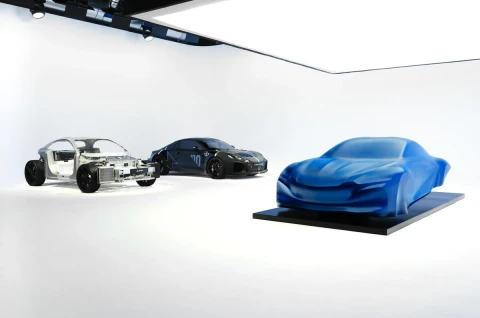
At the same time, the designers did not consciously try to make the Type 01 resemble any existing model. In 2020, Jaguar held a competition between three teams of designers, who created 18 full-size models of the future car—and the most daring version won. As design development director Andy Wheel said, “compromise was a banned word” during its creation.
The car’s exterior look is not the only unusual feature of the Type 01. The car does not have a rear window: visibility is provided by a roof-mounted camera that feeds a cross-cabin screen inside. The rear lights are hidden in a horizontal grille, the doors are made frameless, and the interior is divided into four zones by a central longitudinal element.
Jaguar has developed its own electrical architecture for the car, the JEA. The battery is divided into front and rear parts, which enables passengers to be placed lower and maintain a low silhouette of the car. In a conventional arrangement with a battery installed in the floor, the car would be about 20 cm higher.
The Type 01 is equipped with three electric engines – one in the front and two in the rear. Their total peak power is about 1,000 hp. During calm highway driving, the car can use only the front engine, reducing energy consumption. During acceleration, the rear engines are connected, each of which operates independently, which enables the system to distribute torque between the wheels.
The Type 01 accelerates to 62 miles per hour, or about 100 km/h, in 3.2 seconds. Even more impressive is the acceleration from 62 to 112 miles per hour, or about 100–180 km/h, in just 4 seconds.
The official range in the WLTP cycle is 450 miles, or about 724 km. According to Jaguar engineers, at high speed, the car will be able to travel about 320 miles; that is, about 515 km. The maximum charging power reaches 350 kW. In 30 minutes, it is possible to increase the range to 200 miles, or about 320 km.
Type 01 has become the most aerodynamic serial Jaguar in the history of the brand: its aerodynamic drag coefficient is 0.23. The three-position rear spoiler can create up to 75 kg of downforce, and special aerodynamic elements regulate the air flow to cool the battery and brakes. Depending on their position, the range can increase by tens of kilometers.
Jaguar plans to start sales of Type 01 in February 2027, and the first cars should reach owners in the middle of the year.