make preferable
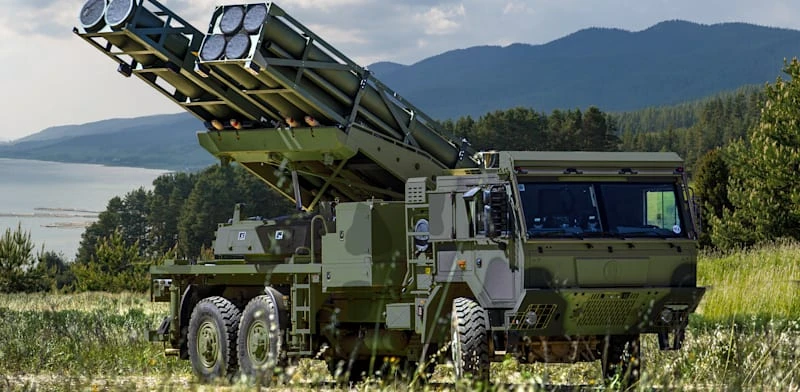
Elbit Systems will supply EXTRA-MR rockets and PULS launchers under an agreement between the defense ministries of Israel and the client nation. Sources inform "Globes" that this is Azerbaijan, "Globes" reports.
Elbit Systems (TASE: ESLT; Nasdaq: ESLT) announced Monday that it had secured a $235 million contract to supply EXTRA-MR (Medium Range) rockets and PULS rocket artillery systems to a European client, under a government-to-government agreement between the Israeli Ministry of Defense and the client nation’s Ministry of Defense. The contract will be carried out over a three-year period.
Sources inform "Globes" that the country in question is Azerbaijan.
Under the contract, Elbit will supply the medium-range version of its EXTRA supersonic rocket system. The contract also includes the supply of PULS launchers, additional rocket artillery platforms, and integrated logistical support.
The EXTRA-MR is a precision-guided rocket designed for medium-range operational scenarios, facilitating accurate strikes against enemy targets at ranges of up to 80 km. The system is fully compatible with Elbit Systems’ PULS platform and existing C4I architectures, offering a flexible and cost-effective capability for a wide range of mission profiles.
Elbit Systems CEO Bezhalel (Butzi) Machlis said, "This contract award further strengthens Elbit Systems’ position as a global leader in rocket artillery systems and reflects the growing international demand for our advanced rocket and launcher capabilities.
"The PULS systems and precision rocket solutions are recognized among the leading systems in their category and have been selected by a growing number of customers worldwide, including European and NATO member states. We remain committed to delivering advanced operational capabilities that support our customers’ evolving defense requirements."
The relationship between Israel’s defense industry and Azerbaijan has recently experienced a resurgence. As reported by "Globes" a week ago, Israeli company Ari Arms recently inaugurated a rifle manufacturing plant in Azerbaijan, with President Ilham Aliyev and his wife, First Vice President Mehriban Aliyeva, in attendance. The event, the first of its kind in the country, was also attended by several senior figures, including Ari Arms owners Avihai Stolero, Ravid Ankonina, and Oren Ankonina.
The facility, which is owned by the Azerbaijani government, has been expanded and will now be the first to produce Western-style M4 rifles. Previously, the plant manufactured only Kalashnikov-pattern weapons. The production of these Western-style rifles is being carried out through a joint venture involving Ari Arms, Azerbaijan’s Ministry of Defense Industry (headed by Minister Vugar Mustafayev), and the Azerbaijani firm Iglim Scientific Production Enterprise.
The deal in Azerbaijan reflects a broader trend in the international defense market-and in the small arms sector in particular-toward developing local production capabilities to minimize external dependency.
Consequently, having already secured agreements with Azerbaijan, as well as nations such as the Philippines and Albania, the company is now on the verge of finalizing further deals that may also incorporate local production.
At the ADEX defense exhibition, Minister Mustafayev presented the first prototype of the M4 manufactured at the plant to Aliyev and Defense Minister Zakir Hasanov. Mustafayev described the project for the president and provided an overview of the production process.
Besides Ari Arms and the major Israeli defense firms, companies such as Aeronautics, Plasan, UVision, Bagira, and BIRD also participated in this year’s ADEX. Another intriguing company with a significant Israeli presence is Ondas, which was represented by its president and chairman, former Mossad chief Dedi Barnea.
These are not the first Israeli-developed technologies to reach Azerbaijan. They include, among others, Elbit’s Hermes 900 UAVs; air defense systems such as Israel Aerospace Industries’ Barak MX; and Rafael’s Spike series of tactical missiles, which are among the most sought-after in the world. Azerbaijan has made operational use of all these systems in recent years during conflicts with Armenia, “Globes” adds.