make preferable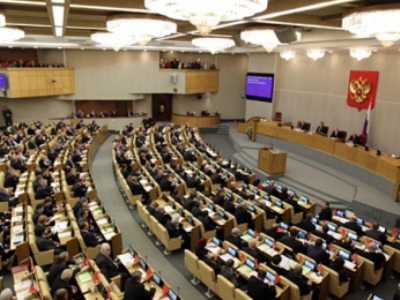
By the third and final reading, the Russian State Duma has adopted the draft laws on the fight against fake news and any offense against the State and society, reports RIA Novosti.
The first draft law proscribes the release of unreliable public information that is disseminated as true information, if this information poses a threat to the life, health, belongings of citizens or disturbs public order or safety and envisages fines from 30,000 to 1.5 million rubles.
The other draft law proposes to block release of information that offends human dignity and social morality, as well as the State. The fines are between 30,000 and 300,000 rubles.
Upon detection of fake news, Russia’s Prosecutor General or deputies will address Roskomnadzor with the demand to take measures to restrict access of violators to the particular pages.
In its turn, Roskomnadzor must immediately inform the editors of the particular newspaper about the need to remove unreliable information, and the newspaper shall be obliged to immediately remove the unreliable information upon receipt of the notification.
If the information is not removed, Roskomnadzor shall have the right to restrict access to the page. If the owner of the newspaper removes the fake news after temporary block, he or she shall be obliged to send it to Roskomnadzor, after which access to the page will be restored.
The draft law clarifies that such a procedure for restriction does not apply in case the aggregator of the news feed posts the unreliable information.
If information offending the State or society is found, the prosecutor or his or her deputies will also apply to Roskomnadzor, which must follow up on the removal or the information or block the resource.
It is proposed to set administrative liability for violations, and the fines are between 30,000 and 100,000 rubles. Committing the violations twice will lead to increase of the fine.
If a person subjected to administrative punishment more than twice for the same crime commits the same actions, he or she shall pay a fine between 200,000 and 300,000 rubles or face 15 days of administrative detention.