Preferred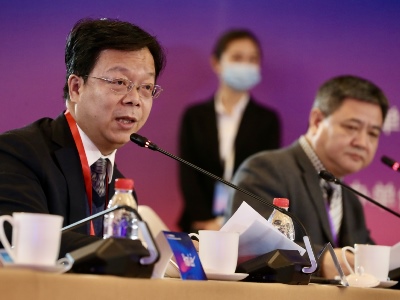
Participants in the Chinese-Russian online media webinar, which took place in Beijing on December 18, called for joint efforts to solve common issues, China Daily reports.
Liu Jiawen, Vice President of Xinhuanet, noted that the media in China and Russia face enormous challenges and open new opportunities for development through a constant exchange of views.
Both sides should jointly defend the truthfulness and objectivity of news reports and contribute to a positive international climate for public opinion.
The media of the two countries must take the lead in finding facts, exposing lies, re-establishing the truth about the pandemic, and improving the international community's understanding of China and Russia. Understanding social development and cultural practices can help eliminate possible misunderstandings and prejudices, he added.
As noted by Wang Wenbin, director of Integration Development Center at China Media Group, while the pandemic has created inconvenience to people's lives and personal dialogue, it demonstrates the important role and great potential of online media in enhancing communication, deepening internal and external cooperation and building a global health community for all.
During the pandemic, China Media Group introduced a dedicated live broadcast that has a sense of reality and presence, displaying every detail of the scene and developments in real-time.
As part of China's main national media, China Media Group will continue to make full use of new technologies, new platforms, and new communication methods, and gradually embark on a new path of media integration and development.
The group will foster a comprehensive strategic partnership between China and Russia.
Chen Lina, executive editor of Sina Weibo, in turn, noted that during the pandemic on Weibo, videos and live streams were an important part of the global media platform system.
Omni-mediatization is the ultimate goal of a holistic media ecosystem in terms of consumer requirements for media content, she said. This is not only reflected in the presentation of multimedia content, but also in the distribution, discussion, and interaction of content, including the provision of valuable and varied information.
The main place will be occupied by diverse and differentiated communication. This pattern has become more evident.
According to Oksana Zadunayskaya, deputy editor-in-chief of Rossiyskaya Gazeta, the pandemic is unlikely to affect print media that have already been digitized. Before the outbreak of the epidemic, there were tremendous changes in the traditional media industry. More specifically, this huge change allowed the industry to calmly withstand the crisis caused by the pandemic.
People's demand for print media has undergone fundamental changes in the consumption of their content due to the widespread adoption of digital technologies in the media industry, such as social networks, information and recommendation aggregation services, applications, and instant messaging programs.
Therefore, during a pandemic, the main priority of the media industry is not the form of the media itself, but whether the management and editors of publications can quickly respond to changes in the situation and quickly adjust their work policies, she added.