make preferable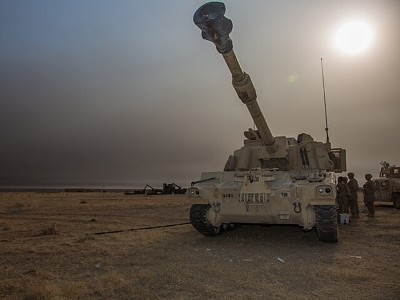
The Euro-Atlantic region is on the verge of the most significant conflict in generations: Russia is threatening a military buildup on Ukraine's borders, and Ukraine and NATO are stepping up defenses in respons, The Hill reported.
"With Russian demands viewed as unrealistic by NATO, and NATO replies termed inadequate by Moscow, leaders are now — as Chairman Nikita Khrushchev warned President John F. Kennedy during the Cuban Missile Crisis — in danger of pulling the knot of war so tight that they will not have the strength to untie it," the article reads.
"Should Russia invade Ukraine, there will be only losers. First and foremost, Ukrainians will bear the brunt of Russia’s considerable military capability. Ukraine is not a member of NATO, and President Biden and NATO allies have made clear that they support Ukraine’s sovereignty and territorial integrity but will not put boots on the ground to defend Ukraine."
Russia itself will not escape both immediate and long-term pain. An invasion would undermine, rather than advance, Russian President Vladimir Putin's stated goals of removing "strike weapons systems" and NATO military infrastructure from Russia's borders and ending Ukraine's aspirations to join NATO. Any prolonged occupation of Ukraine will be accompanied by a prolonged and costly insurgency. Promised Western sanctions on Russia's financial system will do much more damage to Russian citizens and leaders than the 2014 sanctions.
The West will not escape damage either. The Russian economy is much more integrated into the world economy than, for example, North Korea or Iran; therefore, sanctions can bite both sides. The risk to the global economy and energy supply is real, especially in the face of a difficult post-pandemic economic recovery.
In this tense situation, any collision could start a wider fire. The risk of accident, miscalculation or catastrophic decision becomes especially threatening when the two countries with the largest nuclear arsenals are on opposite sides.
Everyone is interested in defusing the situation. The urgent task is to build a process of political dialogue that will allow all parties to stop pulling the ends of the rope and create space for diplomacy to restore and strengthen the Euro-Atlantic security architecture, including Russia.
While Russia will not be given a veto over NATO membership, all parties should have time and space for constructive negotiations. President Biden said that "the likelihood of Ukraine joining NATO in the near future is unlikely," acknowledging that the necessary consensus support among NATO allies for Ukraine's admission to the Alliance will not appear soon.
All this points to a long period before Ukraine can join NATO, so there is a time and place for diplomacy. The avoidable tragedy of this war would be inexcusable, including in the eyes of Russia's own citizens. It will take time to resolve the major political principles at stake for Ukraine, Russia and NATO. The diplomatic path will be difficult, but there are important points to start from.
Many of the issues outlined in Moscow's proposed agreement with NATO were reflected in the US and NATO responses. Both sides are seeking to ban the deployment of ground-based, short-range and intermediate-range missiles in Europe.
Both express concern about military equipment and personnel, as well as military activity and exercises near each other's borders. Taken together, these shared concerns point the way to a practical agenda to de-escalate the current crisis and reduce the likelihood of future conflicts, even in the face of lingering political divisions.
"Many of the issues outlined in Moscow’s proposed agreement with NATO are echoed in the U.S. and NATO responses. Both sides seek to prohibit the deployment of land-based, shorter- and intermediate-range missiles in Europe. Both express concern about military hardware and personnel and military activity and exercises near each other’s borders. Combined, these shared concerns point the way toward a practical agenda for de-escalating the current crisis and making future conflicts less likely, even in the face of prolonged political disagreements. This agenda could include:
- Renewing and sustaining dialogue on Euro-Atlantic security to address the current crisis and to begin to tackle the comprehensive security concerns of all parties;
- Agreeing not to deploy ground-based, shorter- and intermediate-range missiles west of the Urals, with strong verification measures;
- Re-engaging on arms control and confidence-building measures related to deployments of conventional forces in Europe, in particular those deployed near international borders;
- Increasing transparency surrounding military activities and exercises, including by strengthening existing provisions agreed to by all OSCE members — including Russia, Ukraine and NATO allies — requiring advance notification and observation of military exercises exceeding a certain size threshold;
- Intensifying U.S.-Russia discussions of strategic issues, including work on a successor nuclear reductions agreement to put in place before New START expires; and
- Addressing and perhaps verifiably removing U.S. and Russian non-strategic nuclear weapons west of the Urals to reduce nuclear risk and increase decision time for leaders in the Euro-Atlantic region.
These steps represent a beginning, not an end, to a more durable peace. Progress on near-term steps could help rebuild trust and eventually build mutual security. Prioritizing efforts to address practical security concerns — rather than focusing on intractable political disagreements — presents the only sane way to loosen the knot of war," the author said.