make preferable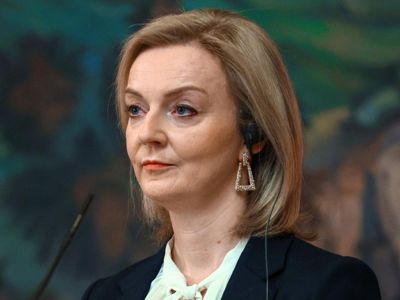
Elizabeth Truss, a 47-year-old Tory activist who wants to be considered the new 'Iron Lady', has been elected the new leader of the Conservative Party and, accordingly, the head of the UK government, promises to reduce taxes and calls for stopping Russian President Vladimir Putin, BBC reports.
Truss will formally take over as prime minister following an appointment by the Queen, expected on Tuesday. Truss is now a staunch conservative and right-wing liberal. The question is whether she will change her beliefs when needed.
In mid-August, Liz Truss, according to one of the polls, defeated her rival in the race for the post of head of the Conservative Party, Rishi Sunak, with a crushing score: 60% of the polled party members for her, 28% for Sunak.
The winner of this election, where only members of the currently ruling party vote, automatically becomes the head of the British government. Liz Truss, more than May, is similar to the determined and ideological conservative leader that Thatcher was, and Truss herself tries to subtly remind of this similarity.
Four years ago, she began a column in the Scottish newspaper Scotsman with a recollection of playing Thatcher in a debate at age seven at her first school in Scotland. What follows is no discussion of Thatcher, only a reminder that she was very unpopular in Scotland. But the image is thrown in, the surnames Thatcher and Truss are side by side, that's enough.
Now the British press notes how she was photographed on a tank in Eastern Europe or how she came in a blue blouse to a TV debate, all these are reminders of Thatcher's media image.
It's not just about the external details. In his speeches and articles, Truss presents himself to the public as a politician of ideas, something that has not been at the helm of Britain in the last thirty years, not since Thatcher's time, a true Tory, right-wing liberal.
Not the kind of liberal who has been called so in recent decades, first in the U.S. and then in Europe, not a leftist in essence, but an original liberal, one who stands for individual liberty and free enterprise.
Yet Truss does not go to church and voted for the legalization of same-sex marriage, such is modern British conservatism.
Truss promises to cut taxes, namely, to repeal the health care and corporate tax hikes introduced or planned by her rival, Treasury Secretary Rishi Sunak.
As a result, the U.K. budget could be short many billions of Sunak's planned tax hikes. Sunak is a financier, and he instinctively wants to keep the budget in balance. Truss is also an accountant by first profession (they both graduated from the same Oxford course), but principles are more important to her now - and she is sure the budget will manage, just postponing a post hoc return to the previous limit of national debt.
In addition, Truss promises a general audit of government spending, as well as the creation of investment zones with simplified rules and requirements for firms.
Truss tries to be liberal in little things, too - symbolic little things.
She, for example, opposes the idea of some government colleagues to impose an additional tax and restrict the sale of unhealthy high in sugar, salt or fat - beverages and foods.
Mary Elizabeth Truss (she, like Alexander Boris de Pfeffel Johnson, prefers to use the middle name rather than the first) is a professional politician, and has shown throughout her career flexibility, pragmatism, flair, in short, qualities that are often described in other, offensive words, unprincipled or weather vane, for example.
Right now Truss's voters are members of the Tory party, and most of them, by definition, must like what she says. But what will she say when and if she has to lead the party into a general parliamentary election, where it would be good to please the majority of the whole population, not just the Conservatives?
In Truss's favor, though, she has been an advocate for free enterprise and individual liberty loudly and consistently for quite a few years.
But her path was not so straightforward in the beginning.
Almost thirty years ago, Liz Truss went to Oxford, the main incubator of the British political elite, to study PPE (Philosophy, Politics, Economics).
At Oxford, Truss, a girl from a family of left-wing convictions, joined the centrist Liberal Democratic Party. She advocated, associates recall, the legalization of marijuana and the abolition of the monarchy, ideas that British conservatives, to say the least, were not close to.
Her former Liberal Democrat running mate and now staunch Conservative opponent Neil Fawcett told CNN's British Observer that he is sure in those days Truss was playing to the public, whether she was talking about decriminalizing drugs or abolishing the monarchy. He thinks she's the kind of person who plays to any audience, and he's not at all sure she believes what she says, then or now.
The year she graduated, 1996, Truss left the Lib Dems for the Tories.
Then there were years of a professional career as an accountant and several attempts to get elected somewhere, with the only successful one being in a London borough council election. And finally, in 2010 she joined David Cameron's expanded team and was elected to the House of Commons.