make preferable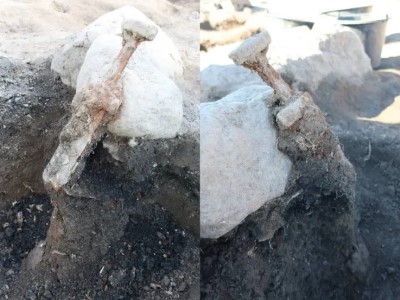
To widen the road in Sweden, archaeologists began excavating a large burial ground, but what they found surprised them.
The burial ground in Westmanland had about 100 graves and two mounds dating from 600 to 1,000 AD, archaeologists from Arkeologerna, part of the Swedish National Historical Museums Agency, said.
Archaeologists found three stone tombs on one of the mounds. When the researchers began excavating these tombs, they noticed two pen-like shapes sticking out of the rocks, which turned out to be a pair of Viking-era swords.
According to experts, the swords were stuck vertically into the two tombs about 1,200 years ago. Archaeologists thought the placement of the swords, deliberately sunk shallow into the ground, was a way to honor those buried underground and give the living a chance to remember those who died.
According to archaeologists, burial grounds in the Viking era were considered places for the living and the dead. People performed rituals, ate sacrificial food, and otherwise communicated with the dead long after they were buried.