make preferable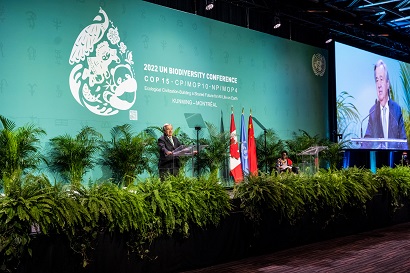
Negotiators at a U.N. summit on nature protection on Sunday came close to reaching a new global agreement that would protect 30 percent of the land and sea by 2030 and direct hundreds of billions of dollars to conserving wild places and species, Reuters reported.
China, chair of the COP15 conference in Montreal, released a proposed text that environmentalists praised for setting forward-looking goals.
The draft, the result of the last two weeks of negotiations, sets a crucial financial target of $200 billion a year for conservation initiatives, although it requires less from rich countries than some developing nations wanted.
It calls for support for protecting 30 percent of land and water by 2030, a landmark goal informally known as 30 by 30.
Businesses will also be asked to assess and disclose how they affect biodiversity, but reporting will not be mandatory.
Ministers from nearly 200 governments have until Monday to agree on the details of the 23 proposed goals. Policymakers hope the agreement can spur conservation in the same way that an international pact made in Paris in 2015 helped mobilize efforts to curb the planet's warming carbon emissions.
The goal calls for protecting at least 30 percent of land, inland water, coastal and marine areas.
The draft recommends allocating $200 billion a year from all sources, including the public and private sectors, to environmental initiatives, a goal considered critical to the success of any deal.
Developing countries have insisted that half of this amount - $100 billion a year - flow from rich countries to poorer ones. But the text only mentions that by 2030, $20 billion to $30 billion a year will flow from developed countries.