make preferable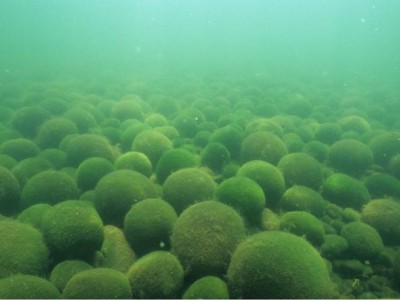
Excessive sun exposure to marimo algae due to global warming could seriously damage their thickets, the University of Tokyo reported.
Egagropila linnea, or marimo, is a green algae that lives in temperate freshwater bodies in the Northern Hemisphere. These plants form dense colonies rolled into a ball, making them a popular culture to grow in the aquarium and used as tourist souvenirs.
The largest marimos are found in Lake Akan on Japan's northern island of Hokkaido, where winter ice protects them from sunlight.
Therefore, biologists went to this lake in winter, measured the light level under water with and without ice, and took a few balls of marimo with a diameter of 10-15 centimeters. In the laboratory, they recreated ice conditions, temperature and light similar to natural conditions. It turned out that maribo cells damaged by sunlight could recover from four hours of exposure in 30 minutes in the shade. However, when exposed to bright daylight for six hours or more, some cells involved in photosynthesis were damaged and the algae died even after shading.
From this, scientists conclude that if global warming continues and the ice regime of Lake Akan is disrupted, its Marimo algae will be seriously threatened and killed.