make preferable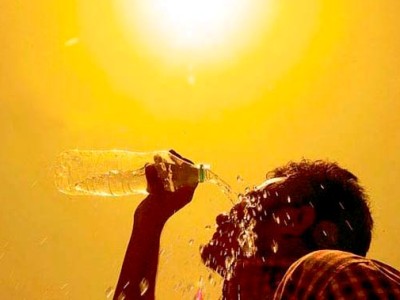
The year 2022 will be Europe's second warmest year on record, European Union scientists said, as climate change caused record extreme weather events that led to reduced crop yields, shoaling rivers and thousands of deaths.
The EU's Copernicus Climate Change Service (C3S) said 2022 was also the fifth warmest year on record by a small margin. C3S records date back to 1950, but other data sets confirm that 2022 was the world's fifth warmest year since at least 1850.
According to C3S, the past eight years have been eight of the world's hottest years on record. The planet is 1.2 degrees warmer now than it was in pre-industrial times, as a result of human-caused climate change. Over the past three decades, temperatures in Europe have more than doubled the global average.
Last summer was Europe's hottest on record, breaking temperature records in countries such as Italy, Spain and Croatia. Strong heat waves caused more than 20,000 "extra" deaths in several countries, including France, Germany, Spain and Britain.
Combined with a lack of rain, the heat wave caused a widespread drought, which initial analysis estimated as the worst drought in Europe in 500 years. Low water levels delayed shipping on the Rhine River in Germany, while the lack of rain hit hydropower generation and reduced corn and soybean yields.
A hot and dry spell triggered intense wildfires from Spain to Slovenia, triggering more emissions in the EU and Britain than in any summer in the past 15 years.
Global temperatures will only stop rising if countries reduce their emissions to "net zero.
The 27 countries in the EU, as well as the UK, Canada, Japan and others, have pledged to reach this goal by 2050, with China and India aiming to reach it later.
Despite these long-term promises, global emissions continue to rise. According to C3S, the concentration of carbon dioxide in the atmosphere averaged about 417 parts per million in 2022, the highest level in more than 2 million years.