make preferable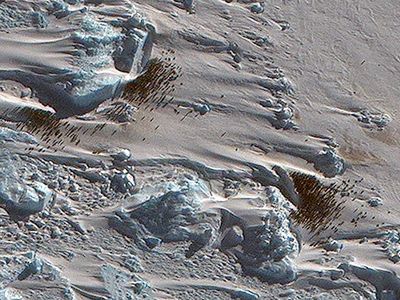
A scientist from the British Antarctic Survey found a previously unknown colony of emperor penguins in satellite images of West Antarctica, Live Science reported.
In photos taken in October by the Maxar WorldView-3 satellite, scientist Peter Fretwell found brown patches of guano that indicated the presence of emperor penguins.
The high resolution of the photo can detect objects as small as 30 centimeters, so the scientist was even able to discern individual birds as dots. It is estimated that the colony near Cape Verleger has about a thousand adult birds, which means it is relatively small compared to the other 66 colonies on the coast of Antarctica.
Studying emperor penguin colonies is difficult, as many of them are in remote areas and are only visible on satellite images. Because penguin guano accumulates and stains the ice and snow a dark brown color, it is much easier to see from afar than the emperor penguins themselves.
Emperor penguins are the largest of all penguins and reach a height of about one meter. They get their name because of their bright black, white and yellow plumage.
Recent satellite studies have even shown that there may be about 20 percent more emperor penguins in Antarctica than previously thought. However, due to global climate change, we will lose at least 80% of the emperor penguin colonies by the end of the century.