make preferable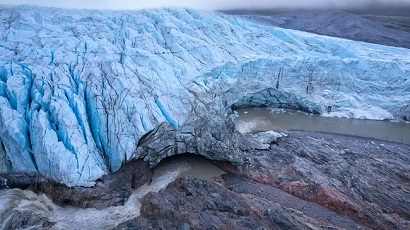
Today, nearly 98% of Greenland is covered in ice—but new research suggests it was virtually ice-free less than a million years ago, reports Live Science.
Over the years, opinion has shifted about whether Greenland has been continuously covered by ice since the start of the Pleistocene epoch, roughly 2.7 million years ago.
But a new fossil discovery, described in a study published in the journal PNAS, "provides the first direct evidence that the center — not just the edges — of Greenland's ice sheet melted away in the recent geological past," according to a statement from the University of Vermont.,
"Our new data is the strongest confirmation yet that the ice in the center of the island vanished and was replaced by a tundra ecosystem," study lead author Paul Bierman, a geologist at the University of Vermont, told Live Science.
To make the discovery, the research team reexamined a sample of an ice core extracted in 1993. They found a plethora of fossils, including willow, fungi and insect body parts. But the most spectacular find was an impeccably preserved Arctic poppy seed.
The team was astonished by the finds.
"The original plan with the sample was to measure [carbon-dating] isotopes, we didn't know we were going to find fossils," Bierman said.
One key piece of evidence was a specimen of rock spike moss (Selaginella rupestris), which today survives only on sandy and rocky places.