make preferable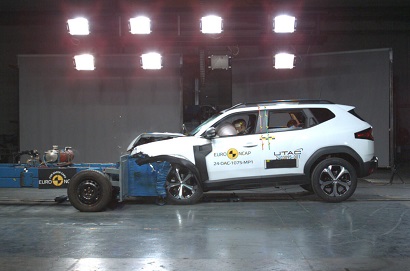
The bosses of Citroën and Dacia have warned that increasingly stringent car safety standards are threatening the affordability of their models—but safety test bodies say the rules are an important indicator for buyers as roads get ever busier and cars become more complex, Autocar reports.
Citroën’s Thierry Koskas and Dacia’s Denis Le Vot have said that while they accept governmental efforts to improve vehicle safety each year (within the European Union’s GSR2 legislative framework), the higher standards set by testing bodies such as Euro NCAP are out of step with consumers’ expectations.
Key to this are the safety test ratings. Vehicles can score up to five stars, which, according to Euro NCAP, tell a buyer how safe a car is. From next year, in order to achieve the top rating, a car must show “overall excellent performance in crash protection and be well equipped with state-of-the-art crash avoidance technology”. This includes both passive safety systems (such as airbags, seatbelts and crumple zones) and active ones (advanced driver assistance systems).
Current five-star cars include the £54,000 Mercedes-Benz E-Class and the £35,000 Skoda Superb.
The rating system is set to be made stricter in 2026.
Koskas and Le Vot argue that in order to hit affordable price points, they are not able to fit the expensive “state-of-the-art” safety tech demanded by the highest ratings.
However, Euro NCAP board member and Thatcham Research chief technical officer Richard Billyeald argues that the higher standards demanded by regulators, and the star ratings that come attached to them, are important to buyers of new cars.
However, the speed at which technology is evolving means cars—like smartphones—are becoming outdated quickly in the eyes of regulators, according to Koskas. This means that unless manufacturers make costly alterations, cars will have their safety ratings reduced.