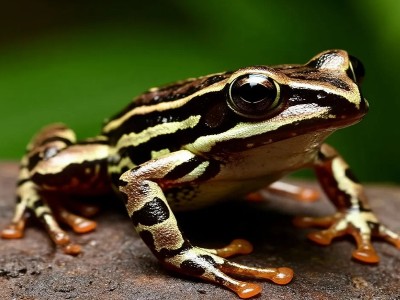
A new species of small poison dart frog from the genus Ranitomeya has been described along the Peru–Brazil border. The frog produces a distinctive call consisting of a rapid series of repeated notes. The study’s results were published in the journal Zootaxa.
The new species has been named Ranitomeya hwata and belongs to the so-called Vanzolinii group of brightly colored tree frogs, which are distinguished by unique calls and mating behaviors. R. hwata can be recognized by its blue or yellow skin, dark stripes along the back, and spotted patterns on its belly and limbs.
Researchers note that the species stands out for its unique call, which is longer, has more pulses, and is slightly higher in frequency compared with neighboring members of its genus.
This discovery also corrected a long-standing scientific misunderstanding. Previously, it was assumed that Ranitomeya sirensis inhabited the Rio Branco area of Acre, Brazil; field studies now show that the local population represents a separate species.
In addition to morphological and acoustic differences, R. hwata displays distinct reproductive behavior. A single male mates with multiple females, whereas some related species, such as R. imitator, are monogamous.
A key characteristic of R. hwata is its close association with a particular plant. Nearly all specimens were found in clumps of Guadua bamboo, where females lay eggs and tadpoles develop in water-filled stem cavities. Unlike some other species, R. hwata does not exhibit cannibalism.
“What surprised us most was how strictly this species depends on Guadua bamboo. Unlike other species where this behavior is limited to certain populations, R. hwata appears entirely restricted to these bamboo clumps,” said lead author Evan Twomey.

 make preferable