make preferable
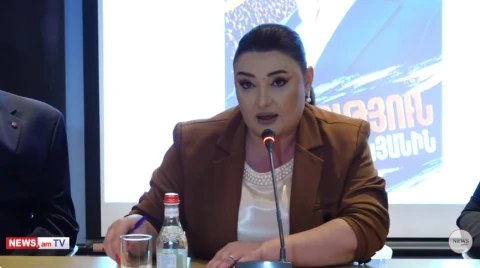
The Armenian prisoners in the Azerbaijani capital Baku have no physical contact with the outside world. That is, they do not see their relatives, consular employees, independent doctors, independent lawyers, representatives of the International Committee of the Red Cross. That is, they are held in conditions of absolute isolation from the outside world. Lawyer Siranush Sahakyan, head of the “International and Comparative Law Center” NGO and representative of Armenian prisoners of war before the European Court of Human Rights, told this to a press conference Friday.
"Of course, their other rights are also violated; for example, the right to walk. But the main problem is that they are in absolute isolation. The only contact with the outside world is telephone conversations. Convicts must make use—for example—of the right to correspond, send and receive letters; this right is also not maintained. Convicts have the right to short and long-term visits from relatives, friends, certain categories of persons; this right is also not ensured.
The only thing that is provided is monitored phone calls, the frequency of which varies. For example, there are three convicts who are able to organize calls once every 40 days, while the rest are provided with the opportunity to call once a week. The duration of the call is variable; in some cases it can be two minutes, three minutes, in some cases they can allow up to 10 minutes. The problem is that all these calls are monitored, they are discretionary, and depending on the content they can also be subject to forced interruption. We also saw a vivid example of this in the case of [former Artsakh (Nagorno-Karabakh) state minister and well-known businessman and philanthropist] Ruben Vardanyan [who is being held in a Baku prison], when he was trying to raise the issue of not providing him with the verdict, the need to petition to the Azerbaijani ombudsman, and obtain that act with certain efforts, the call was forcibly interrupted,” Sahakyan said.
She explained that the call provides a contact with a family member.
“No opportunity is given [to these Armenian prisoners] to speak directly with me. Within the framework of the calls, family members try to understand the situation, and especially the health situation. In recent months, the raising of health problems has intensified. And there are constant complaints that medical care is not organized, even after certain hours there is no representative of the medical staff in that [penitentiary] institution, and if there is a sharp deterioration in health, there are also no opportunities to provide urgent emergency care. Basically, in an extreme situation, medication may be provided to alleviate some symptoms, but measures to prevent the existing illness or its deterioration are not taken at all. To our knowledge, medical care and medical service are not organized properly for Armenians.
Many [of them] have been sentenced to 15 years in prison. For example, if the latter, for example, is repatriated to the Republic of Armenia after serving 15 years of his sentence, what will be his health condition?
Certain documents regarding their health condition are received through the ECtHR. We received such information in February-March 2026, the deadline for providing new information has expired as of August 31, we are waiting for a few days to receive a note from the secretariat and, based on that, we will know what information was provided to the court," said Siranush Sahakyan.