make preferable
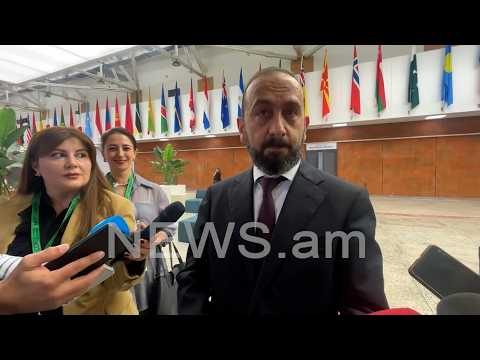
This is a sensitive issue that interests all of us; therefore, it is important to come to a mutually acceptable solution in this matter, and the exchange of territories should be by popular vote. Armenian Minister of Foreign Affairs and International Trade Ararat Mirzoyan on Friday told this to reporters within the framework of the 17th meeting of the Conference of the Parties (COP17) to the UN Convention on Biological Diversity, in Yerevan.
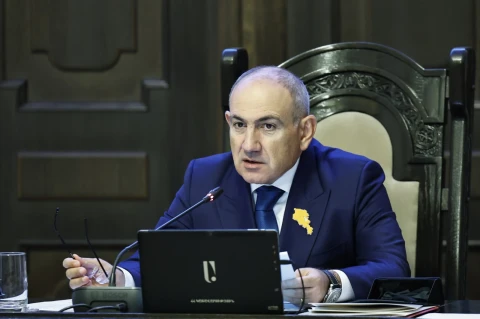
He noted this, referring to Armenian Prime Minister Nikol Pashinyan’s recent statement that there is an understanding that there should be no enclaves and exclaves in the territories of Armenia and Azerbaijan; that is, an exchange of territories should take place.
“If there is a solution that satisfies the [two] societies, then it will naturally help strengthen the trust of both societies, at most providing them without landmines for the future, because the ‘enclave-exclave’ [issue] even technically complicates the lives of countries, even if everything is wonderful in relations. Well, you know what the Azerbaijanis say; they say, ‘Until you change the [Armenian] constitution, we won’t sign [the peace agreement],’ they didn’t say,” Mirzoyan noted.
Also, he explained how the exchange of territories shall take place.
“Let’s assume, each has 70 square kilometers deep inside the other, or the border shifts a little and the enclaves disappear, or we say, ‘Those 70 [square kilometers] to you, these 70 [square kilometers] to us.’ It’s clear that there won’t be exact equality there, it needs to be changed a little. But at the moment there is no agreement, there is a willingness on both sides to try to resolve this issue in such a way that later the lives of the two peoples and citizens will not be complicated,” the Armenian foreign minister said.
Regarding the remark that it was initially decided that the Armenia-Azerbaijan border would be delimitated from north to south, the minister said that this principle is not violated, but there is also an understanding that there may be a need to speed up, to put individual sections ahead of the queue.
“For example, infrastructures will have to pass, there will be a need to determine a separate border in those parts so that problems do not arise later during construction. That agreement has been reached, it is written, it has been ratified by the National Assembly [of Armenia], and now, when there is such an understanding regarding the same enclaves, I do not exclude that this issue will also come forward,” he noted.
As for the implementation of the Trump Route for International Peace and Prosperity (TRIPP) regional transport project, Ararat Mirzoyan noted that it is not very realistic that its launch will take place this year.
“Our approach is this: as soon as possible. We are trying to make sure that some kind of start to construction is made this year. I don’t know, experts say, it will be difficult to make it. There are still two documents left regarding TRIPP. One is the shareholders’ agreement, by which the TRIPP Development Company will be established, its charter. These are in the final phase, the last points are being made,” said the Armenian foreign minister.