make preferable
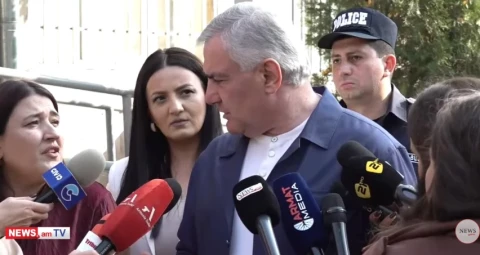
There is ongoing work to release the Armenian captives in Azerbaijan. Unfortunately, they have not yielded results, which is another evidence of how wanted the representatives of the military and political leadership of Artsakh (Nagorno-Karabakh) are for the Azerbaijani authorities. Siranush Sahakyan, the Armenian prisoners’ of war representative at the European Court of Human Rights (ECtHR) and president of the International Comparative Law Center, stated this in an interview with Armenian News-NEWS.am.
"The destruction of Artsakh's right to self-determination was and continues to be within the framework of Azerbaijan's policy. There are, of course, processes within the framework of which we [i.e. Armenians] can form expectations that these persons could be released. There are high expectations in the context of COP29 [conference], which has a key human rights component. In the case of a realistic approach, we do not foresee the release of the [Artsakh] leadership, but we do not rule out the release of other categories of [Armenian] hostages. For example, the prisoners of war of the war of 2023, who can be released amid a humanitarian gesture.
In parallel, work is being done in the legal system, there is active communication in some of the cases with the government of Azerbaijan through the ECtHR, but these are not finished processes either. So we have to wait," Sahakyan said.
According to her, the direction of work during this period should be diplomatic and political. One of the steps aimed at this is to raise the issue in this session of the Human Rights Council.
As for the Artsakh military and political leadership’s trial in the Azerbaijani capital of Baku, Siranush Sahakyan said that in the current history of Azerbaijan, no judicial act has been and cannot be made regarding Armenians.
"Regardless of the factual validity of these cases, the courts of Azerbaijan validate the accusations presented by the prosecutor's office on the basis of a political order. They are ‘shaped, sewn’ within the framework of political order. We see that a political order is given verbally at the level of the president, the minister of foreign affairs, followed by the statement of the law enforcement system that they have uncovered crimes related to various crimes committed by Armenians. This shows that the political order is being formed and the law enforcement system is serving. Courts perform such a service function in Azerbaijan. All international assessments by independent organizations raise the issue of telephone justice, the making of judicial acts by political orders. Azerbaijan is among the leaders in the world in the number of political prisoners," Sahakyan said.
She emphasized that the real platform of Armenians' fight is the international courts.
"There are interstate and individual complaints in the ECtHR. All the cases that were submitted within the framework of the interstate complaint were raised through individual processes in the mechanisms dealing with human rights issues of the UN," Siranush Sahakyan concluded.