make preferable
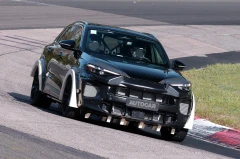
Hyundai will continue to develop its N series of high-performance electric cars and intends to make them even more emotional and realistic for drivers, Autocar reports.
The next generation of these sports models will have an improved engine and transmission simulation system, which should surpass the current Ioniq 5 N and Ioniq 6 N in terms of realism.
Hyundai's electric cars have already attracted attention with their unusual approach to creating driving sensations. In addition to impressive power and dynamics, they are equipped with a system that reproduces the sounds of an internal combustion engine and simulates gear changes.
This technology has been so successful that other manufacturers, including Honda and Porsche, have begun to introduce similar solutions. Manfred Harrer, who heads global R&D for Hyundai, said the company sees itself as a leader in this area and is already working on a new generation of technology.
"We are leading—we are not following—on this technology," he said. "In the next generation of these cars, I want to make it even more realistic. I want to enhance it further." According to him, future sports electric cars will be able to not only simulate gear changes, but also reproduce features typical of gasoline cars, such as engine idling, exhaust pops, and additional body vibrations. All this should increase driver involvement and make the feeling behind the wheel more emotional. Harrer admits that some car enthusiasts find such solutions artificial, but notes that many drivers really like them.
“A lot of people say it's fake, but people like it so there is some beauty—and why not play around with it?” he said. Hyundai emphasizes that its N division focuses primarily on driving pleasure, rather than achieving absolute technical indicators. New technologies will appear along with the promising IMA platform, which will gradually replace the current E-GMP architecture in the coming years.
It is on the basis of E-GMP that Hyundai’s modern electric cars, including the Ioniq 5, are built. The new platform will have the next generation of the 800-volt electrical system, faster charging, and fifth-generation batteries. In addition, engineers promise to improve thermal management, increase the overall efficiency of cars, and reduce production costs.
At the same time, Harrer emphasizes that this is not a revolutionary leap, but a large-scale evolution of existing technologies. “It's not a revolution like the first generation. It's a huge evolution.
A lot of things we are enhancing,” he noted. It is expected that the first models on the IMA platform may appear around 2028, when Hyundai will begin updating its current Ioniq 5 generation. It is then that the company will probably introduce a new generation of N sports electric cars, which will more convincingly reproduce the driving sensations of a traditional gasoline sports car.