make preferable
A slowdown in one of Earth’s most important ocean currents could alter weather far beyond the Atlantic Ocean. A weakening of ocean circulation could intensify storms hitting California and reduce the snowfall that helps maintain the integrity of Greenland’s vast ice sheet.
A new study shows how changes in the Atlantic Meridional Overturning Circulation (AMOC) propagate through the atmosphere, shifting storm tracks thousands of kilometers away. The findings revealed an unexpected link between the weakening ocean current and two of the world’s most important sources of water and ice. The study was led by scientists at the University of California, Riverside (UCR). The results were published in the journal Nature Communications.
“It is well known that the Atlantic Meridional Overturning Circulation (AMOC) plays an important role in the global climate system and that it is slowing down,” said lead study author Mohima Mimi of the University of California, Riverside. “We did not know exactly how the Atlantic Meridional Overturning Circulation (AMOC) might affect atmospheric moisture and storms beyond the Atlantic region.” The researchers found that a weakening AMOC would lead to stronger storms in some parts of North America, especially along the California coast. At the same time, storm activity over Greenland and the Arctic is projected to decline by the end of the century. This phenomenon truly seems counterintuitive. One of the currents in the Atlantic is slowing down, and somehow that means stronger storms strike California’s Pacific coast while Greenland becomes calmer.
This connection works through the atmosphere, not just through the ocean, which is why no one had previously been able to clearly identify it. As the AMOC weakens, ocean temperatures change in a way that affects how much moisture the atmosphere can hold, Planet Today reports. This, in turn, strengthens the upper-level winds that steer storm systems across the Northern Hemisphere. Stronger winds mean storms can carry more moisture to the West Coast. That moisture feeds what meteorologists call atmospheric rivers — long streams of concentrated water vapor flowing from the tropics toward higher latitudes.
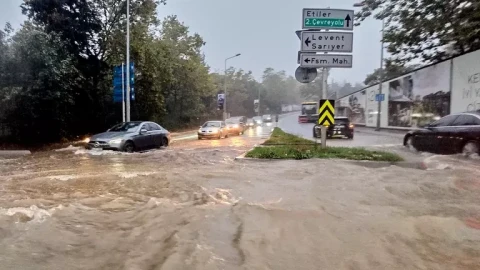
“In California, atmospheric rivers are a double-edged sword,” Mimi said. “They provide most of the state’s water, but as they grow stronger, they can also cause widespread destruction.” These are the very storms that fill reservoirs and pull the state out of drought. The problem is that as they intensify, the line between “welcome rain” and “catastrophic flooding” becomes ever thinner. California is not the only place affected by this issue. Modeling by the researchers also points to the formation of more atmospheric rivers along the eastern coast of South America and around Antarctica.
This extends the influence of the AMOC far beyond the Pacific coast, with which it is usually associated. Meanwhile, weather patterns are shifting and storms are moving farther north. Fewer storms reach Greenland, leading to less snowfall needed to replenish its enormous ice sheet. These projections are based on a high-emissions scenario in which the AMOC steadily weakens through the end of the century.
Scientists have already observed a slowdown of the Atlantic Meridional Overturning Circulation (AMOC) as human-caused warming heats the planet. Climate models suggest that this trend will continue if greenhouse gas emissions remain high. These emissions are mainly linked to the burning of coal, oil, and natural gas, as well as methane emissions from cattle and other animals, deforestation, industrial activity, and landfill waste.
Lead study author Wei Liu said that reducing emissions from these sources could ease pressure on the AMOC and, in turn, mitigate the storm intensification projected by the study. There is also a bit of good news hidden in all of this, if people are prepared for it. Stronger atmospheric rivers do raise the risk of flooding and threaten infrastructure. But they also bring more water, and that extra water is an opportunity if communities are ready for it. By expanding storage capacity and improving forecasting, they can capture that moisture instead of simply allowing it to cause damage. For the state of California, this is no minor detail, since half the time it spends fighting drought and the other half preparing for floods. Whether these stronger storms ultimately prove to be a benefit or a disaster will likely depend on how seriously infrastructure investment is taken now, while there is still time to prepare.
Looking at the bigger picture, the real story here is not about any one specific storm or coastline. It is about how tightly interconnected the planet’s climate system is. A slowdown in one Atlantic current changes precipitation patterns across several continents, affecting water resources, ecosystems, and entire communities. “This study shows that the influence of the Atlantic Meridional Overturning Circulation (AMOC) extends far beyond the Atlantic Ocean,” Mimi said. “Understanding these connections will help us better prepare for future changes in water resources and extreme weather events.”