make preferable
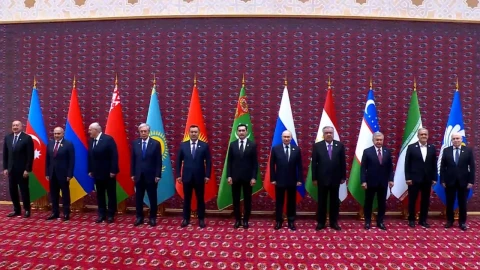
Our goal is to create alternatives for Armenia. I believe this is the legal right of any country, and I believe that all countries are working so that there are alternatives, Armenian Prime Minister Nikol Pashinyan told Russian reporters on Friday, on the sidelines of the 47th meeting of the Eurasian Intergovernmental Council, in Cholpon-Ata, Kyrgyzstan.
“I believe that the best position for the Eurasian Economic Union would be not to torpedo this process like this, but, on the contrary, to work towards increasing the competitiveness and appeal of the Eurasian Economic Union. Armenia is ready to work in that direction.
As for the choice [of Armenia between the Eurasian Economic Union (EAEU) and the European Union (EU)], first there is a need to create the opportunity for a choice, and only then make the choice.
I have taken note of the statement of the [other] EAEU colleagues on May 29, and I respect it. There is a very interesting nuance: the colleagues support the idea of holding a referendum in Armenia on the matter of membership in the European Union. I highly appreciate that position.
There will be a [respective] referendum, but only after Armenia officially applies to the European Union for membership, and there is a need to work institutionally in that direction.
Today, it is impossible to hold [such] a referendum [in Armenia], because the subject of that referendum does not exist.
If we organize a referendum now and call for an orientation, what will be the reaction of the citizens of Armenia? They will ask: ‘And what are our prospects for becoming a member of the European Union? And what [respective] roadmap do we have?’ etc. There will be many questions to which we do not have the answers, and no one has those answers. And what is happening now in the EAEU territory only provokes the negative perception of the Eurasian Economic Union in Armenia. I mean the restrictions that our esteemed Russian partners have imposed on Armenian products.
It is very important for any country to increase the quality of production, competitiveness, and standards. We [i.e. Armenia] are working in that direction, the other EAEU countries are also working in that direction,” Pashinyan noted.
Also, he called for “not to negate” this process, considering it a good opportunity to work together to increase the appeal and competitiveness of the EAEU.
“It is very important to understand that without the possibility of implementing the fundamental principles of Eurasian economic development, the EAEU will find itself in a crisis.
What is happening now regarding Armenian goods is, of course, a problem for Armenia, but it is also a serious problem for the EAEU.
In practice, it turns out that the EAEU is not working. If it is not working in essence, it means the EAEU is not working,” the Armenian premier noted.