make preferable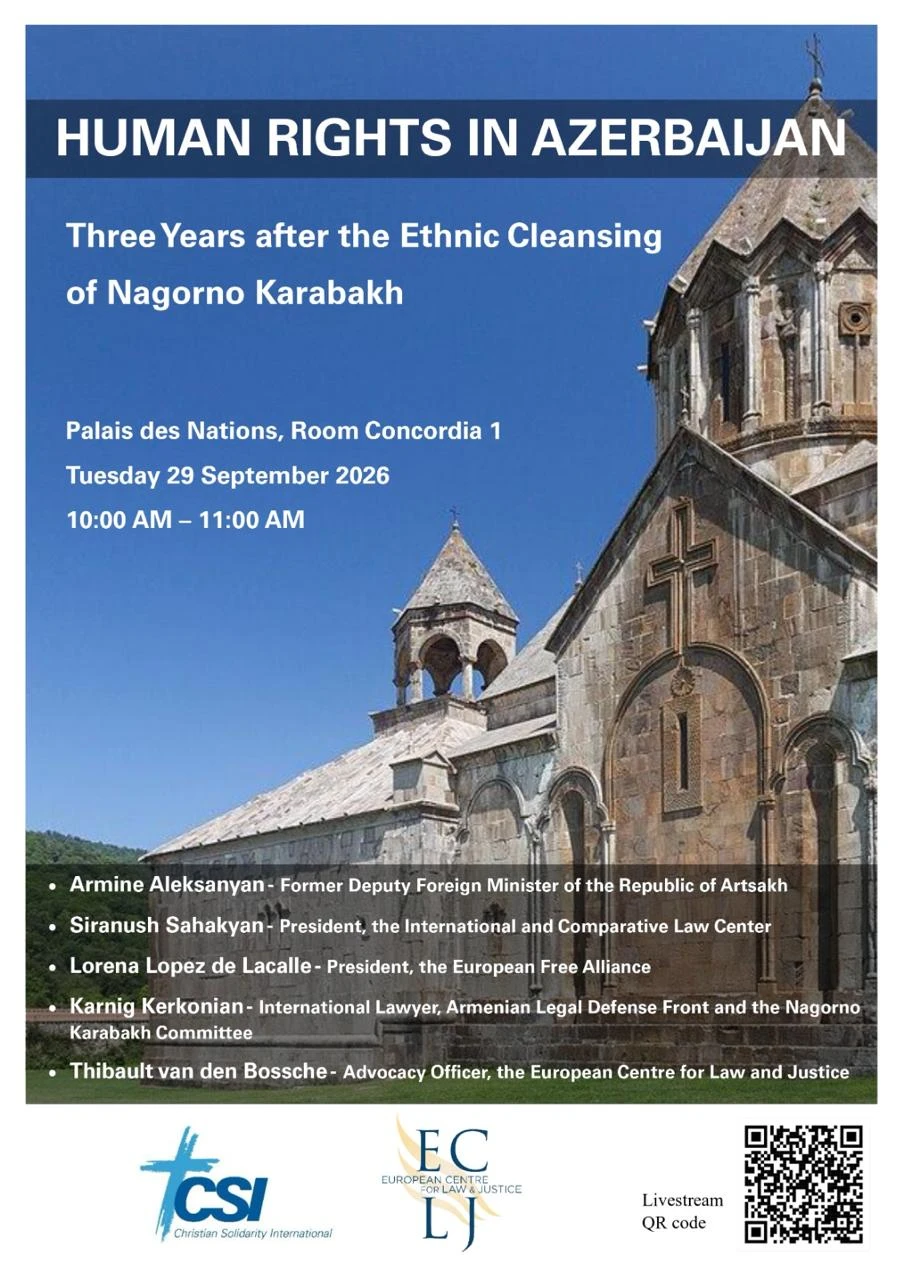
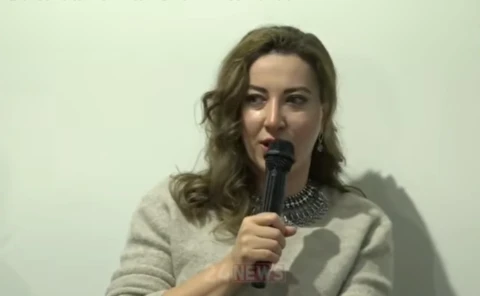
Siranush Sahakyan, director of the International and Comparative Law Center, on Tuesday participated in a discussion organized by Christian Solidarity in Geneva within the framework of the 63rd session of the UN Human Rights Council, dedicated to the three years since the forced displacement of the Armenians of Artsakh (Nagorno-Karabakh) and the protection of the rights of displaced persons, the aforesaid center informed Armenian News-NEWS.am.
During the discussion, Sahakyan addressed the situation of Armenians held in the Azerbaijani capital of Baku and their families, presenting the prolonged human and psychological suffering endured by families as a result of captivity. At the beginning of her remarks, Siranush Sahakyan presented the story of a relative of one of the Armenian captives held in Baku, concerning the circumstances of her husband’s capture and the hardships endured by the family. Sahakyan emphasized that this story demonstrates what it means to live in uncertainty for years, when a family is deprived of full contact with their loved one and has no definite information regarding his health and legal situation.
Speaking about the peace agreement initiated between Armenia and Azerbaijan in Washington, Sahakyan said: “The agreement contains no provision requiring the release of Armenian captives. However, on another matter, it establishes a clear timeline: Article 15 requires the parties to withdraw interstate complaints within one month after the agreement enters into force. This creates a difficult contrast. Legal proceedings arising from the conflict may eventually disappear from international forums, but the people whose rights formed the basis of those proceedings do not disappear with them, nor do the violations simply cease to exist because the examination of court cases is discontinued. Therefore, for the families, the question is simple: what has actually changed for them since Washington, in this era of peace?” said Sahakyan.
She also addressed the termination of the permanent presence of the International Committee of the Red Cross in Azerbaijan. According to Sahakyan, the visits previously conducted by the ICRC constituted an important mechanism for assessing the treatment of detainees and their conditions of detention, as well as for maintaining contact with their families.
Alongside the weakening of this system of humanitarian protection, serious concerns are also raised by the criminal proceedings themselves, which have resulted in severe sentences, including life imprisonment and lengthy prison terms.
“Amnesty International has strongly criticized the trials conducted against 16 Armenian defendants, the most recent of which concluded with the judgment in Ruben Vardanyan’s case, describing them as a ‘travesty of justice.’ The European Parliament, in its resolution, characterized these proceedings as sham trials. Human Rights Watch, an international human rights organization, has also expressed concern regarding the fairness of the trials and called on Azerbaijan to ensure that persons deprived of their liberty have regular contact with family members, access to necessary medical care, and regular access by the International Committee of the Red Cross. These are not privileges. These are fundamental safeguards for preserving human dignity that must be ensured for every person, regardless of the charges brought against them,” said Sahakyan.
At the conclusion of her remarks, Sahakyan emphasized that the assessment of the peace process must also include the rights and security of people affected by the conflict: “If there is to be genuine peace, those who remain in captivity must be released immediately.”
The discussion was also attended by former Deputy Foreign Minister of the Republic of Artsakh Armine Aleksanyan, President of the European Free Alliance Lorena López de Lacalle, international lawyer Karnig Kerkonian, and Thibault van den Bossche, a representative of the European Centre for Law and Justice.