make preferable
Conflict, insecurity, and institutional instability hinder global commitments to biodiversity conservation, but these factors have not yet been directly reflected in international documents regulating the sector.
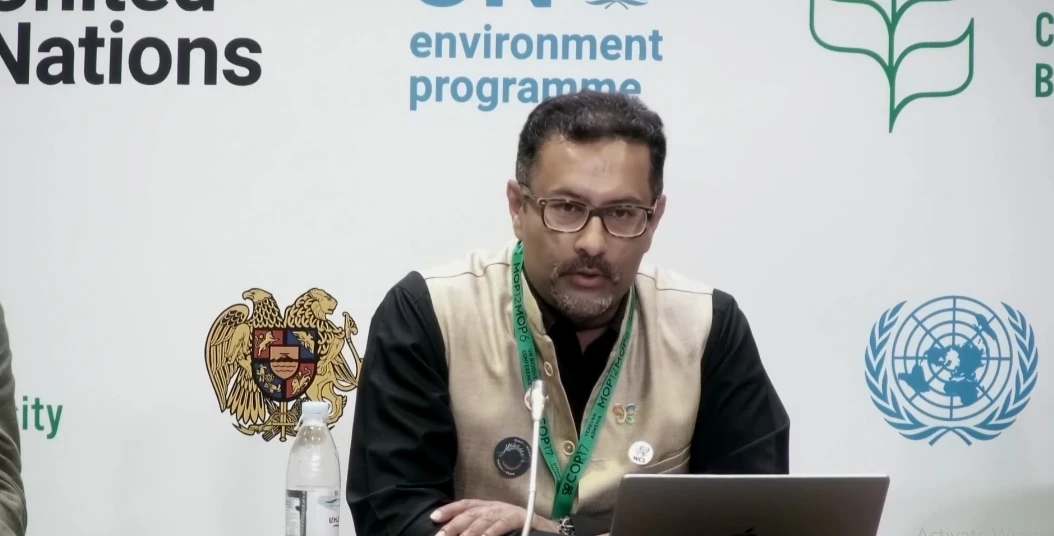
Sushil Raj, the Executive Director of the Rights and Communities Global Program at the Wildlife Conservation Society and mediator of the New York Peace Institute, stated this on Tuesday during a press conference held on the sidelines of the 17th meeting of the Conference of the Parties (COP17) to the UN Convention on Biological Diversity, being held in Yerevan, the Armenian capital.
According to Raj, nature and biodiversity can create opportunities for interaction, cooperation, and the realization of common goals. At the same time, the management of natural resources can turn into a source of competition, isolation of certain groups and conflict. He noted that conflict-ridden environments hinder environmental activities, the achievement of targets, biodiversity monitoring, financing, and cooperation.
Raj welcomed the fact that the first draft of the global progress report had identified conflict and institutional instability as obstacles to the implementation of the Kunming-Montreal Global Biodiversity Framework. However, he stressed that this recognition must lead to concrete action.
According to the speaker, peace issues have also been raised at previous conferences of the Parties to the Convention on Biological Diversity, but further steps are needed. He believes that the post-2030 global biodiversity framework should include peace and security issues, providing for measures that will protect nature and people in areas of conflict and instability.
Raj explained that financial assistance, capacity building, and monitoring indicator tools can be used for this purpose. Raj informed that a network of stakeholders is being formed, which includes states, civil society organizations, indigenous peoples, local communities, youth, and other actors. In addition, according to him, prerequisites are being created for the formation of an informal coalition of states interested in studying the interrelationships of nature, peace, and security.
He stressed that biodiversity policies must take into account the conditions in which states, indigenous peoples, local communities, people of African descent, and other population groups find themselves. According to him, environmental measures must respect human rights and take into account the root causes of both biodiversity loss and conflict.
To substantiate his position, Raj referred to a study prepared by the UN Expert Mechanism on the Rights of Indigenous Peoples, which is dedicated to protecting their rights in conflict and post-conflict situations. The study, as he presented it, identifies such causes of conflict as historical injustice, deprivation of lands and resources, denial of the right to self-determination, and systemic inequality.
Also, Raj drew attention to the disproportionately heavy impact of conflict on indigenous peoples. Among the consequences, he mentioned the disruption of cultural and governance systems, as well as the pressures caused by climate change and competition for resources.
Raj believes that the conflict situation factor should be directly included in the planning and implementation of environmental programs. For this, it is necessary to strengthen the capacities of governments, youth, and other stakeholders so that they are guided by the “do no harm” principle and do not allow environmental measures to exacerbate existing tensions, or create new conflicts.
He assessed the insufficient consideration of these circumstances in the global policy for biodiversity conservation as a gap in ensuring justice. As the speaker explained, international obligations should take into account the structural obstacles that various countries and communities face and promote equitable ways to achieve common goals. Turning to the practical implementation of environmental programs, Raj noted that they can contribute to strengthening governance in the territories of indigenous peoples and traditional communities, including the protection of their lands, culture, and species of living organisms.
He considered peacebuilding and conflict-sensitive environmental activities to be important components of such an approach. Peacebuilding, Raj said, also involves using traditional dispute resolution methods used by indigenous peoples and local communities.
He added that environmental organizations are already adapting their programs to conflict situations, and that appropriate toolkits are available for professionals. Raj called on governments and other stakeholders to use the growing interest in the interrelationship of nature, peace, and security to engage in open dialogue with rights holders.
In his view, such dialogue is necessary to understand what security means to different groups and to chart the way forward for the global environmental movement.