make preferable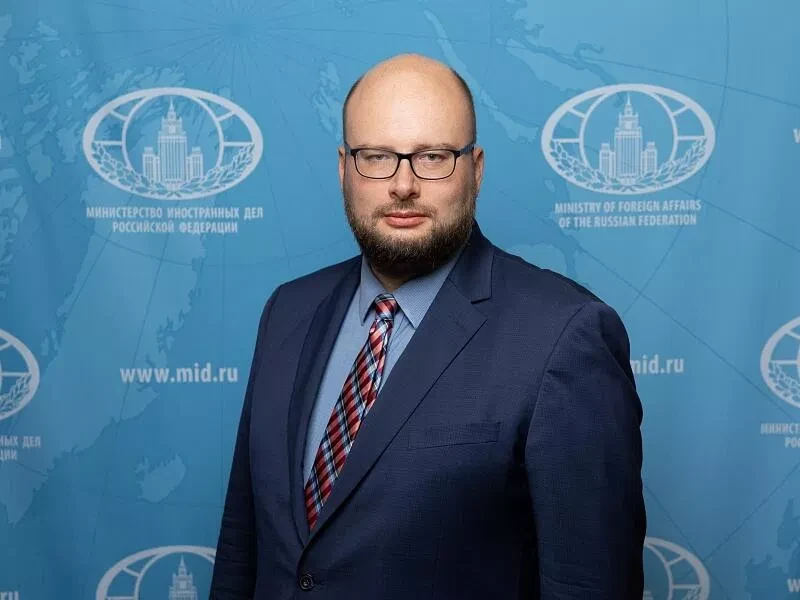
If Armenia decides to review the allied status of its relations with Russia within the framework of its foreign policy “diversification,” it will also have to give up the privileges provided by Moscow. Mikhail Kalugin, Director of the Fourth CIS Department of the Ministry of Foreign Affairs (MFA) of Russia, stated this in an interview with RIA Novosti.
“If the Armenian authorities want to review this status within the framework of foreign policy ‘diversification,’ this is their right. But in this case, they will have to give up also the privileges that Moscow provides only to its allies,” the Russian diplomat said.
According to him, one example of such privileges is the price of Russian natural gas for Armenia. Kalugin noted that Moscow does not object if Armenia purchases natural gas from other countries as well, since this possibility is provided for in the 2013 Russian-Armenian agreement.
At the same time, he noted that Russia provides up to 85% of the natural gas being consumed in Armenia: about 2.2-2.7 billion cubic meters per year. Russian natural gas supplies to Armenia are carried out without export duties at a fixed price of $177.5 per 1,000 cubic meters. Kalugin noted that, in addition, Armenia receives oil products from Russia without customs duties.
“It is obvious that Yerevan will not find such preferential conditions as those offered by Russia anywhere else today. Gas will have to be purchased at market prices, which will lead to the emergence of new holes in the [Armenian state] budget,” the Russian MFA official said.
Also, Kalugin slammed statements about the high cost of Russian natural gas for Armenia. In his view, an information campaign was previously carried out, the participants of which tried to convince Armenia’s public that Russian gas is too expensive for ordinary consumers.
“It is true. According to the calculations of these ‘analysts,’ the blue fuel coming from Russia, including all costs, was cheaper than it costs today, as businessmen say, ‘at the time of purchase,’” said the Russian diplomat.
In addition, he stated that possible financial support for Armenia from the European Union will not compensate for the consequences of switching to more expensive supplies. According to Kalugin, Brussels does not have the funds for such subsidies, and possible loans will only increase Armenia’s debt burden.
“Judging by the experience of other countries, Western political technologists will not think of anything better than to call it the price of independence that Armenia must pay,” said Kalugin.
He warned that as a result, Armenia may face higher energy costs and dependence on new suppliers.
“For its own much larger sums, the country will become dependent not on an ally with whom it can negotiate, but on those who will simply unconditionally dictate their conditions and requirements,” the Russian diplomat said.
Furthermore, Kalugin linked affordable Russian energy resources to the development of Armenia’s industry and high-tech sector. As an example, he cited Hrazdan city’s energy-intensive data processing center, which is located nearby Armenia’s largest thermal power plant and runs on Russian natural gas.
According to him, abandoning Russian energy resources could affect Armenia’s ability to develop such projects.
Also, Kalugin made a reference to the experience of European countries, stating that the rise in energy costs has already created serious problems for German industry.