make preferable
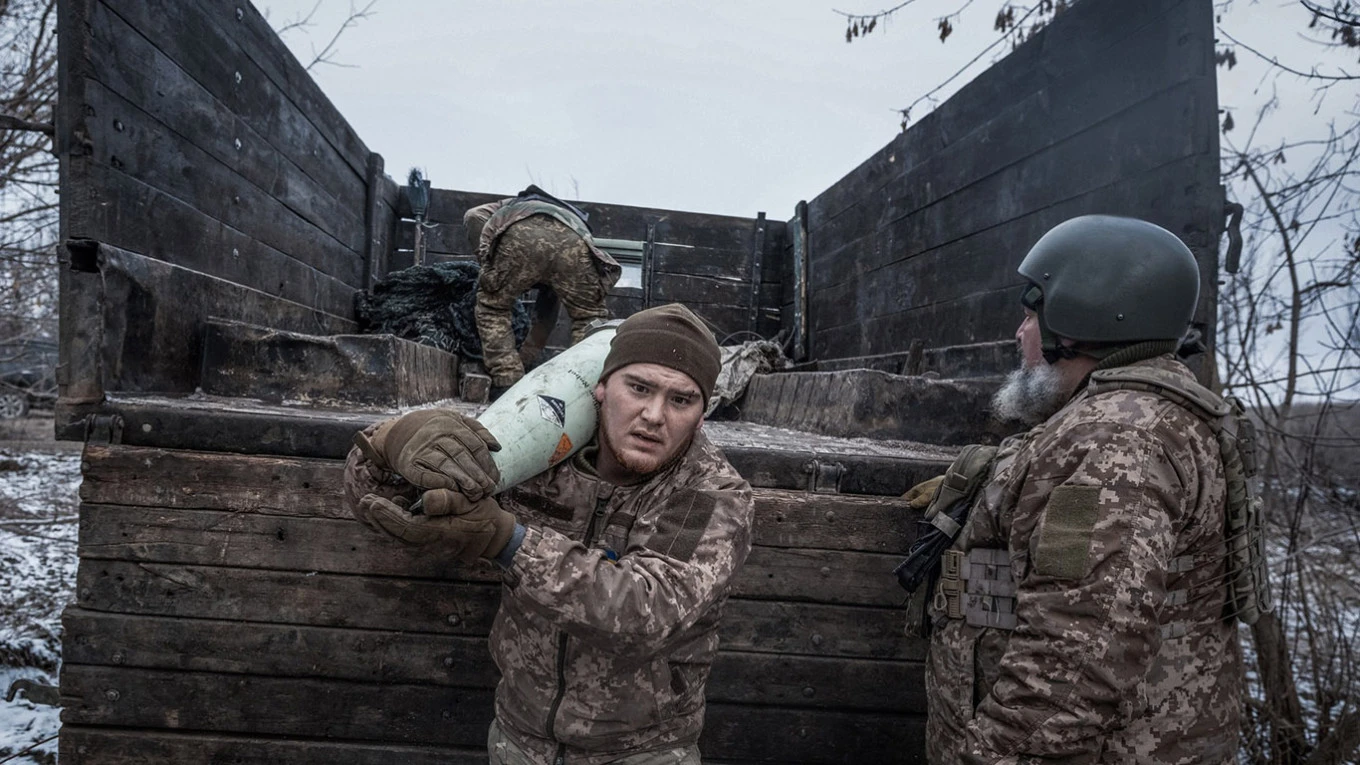
After unleashing the war on Ukraine, Russian President Vladimir Putin not only had to sell Russian oil left outside the European market to India and China at huge discounts, but also unwittingly helped India earn huge sums of money from the ammunition it supplies to Europe. The latter at first could hardly procure ammunition for Ukraine, and then it itself began to actively rearm.
Since the start of the Russian invasion, Indian manufacturers have exported at least $872 million worth of ammunition—including artillery shells, mortar shells, rocket fuel, and explosives—to Europe, Bloomberg reports, based on data from the Indian Ministry of Commerce and Industry, obtained through Trade Data Monitor. For comparison, in the four years preceding the war, the amount of such exports was only $49.2 million; that is, supplies increased by almost 18 (17.7) times.
European countries needed ammunition like air and water. In 2022, they decided to produce 1 million artillery shells for Ukraine by March 2023. But due to a lack of production capacity, they implemented this plan only towards the end of the year.
Ukraine was 3-5 times inferior to Russia in artillery power, and in certain sections of the front and in difficult phases this difference increased tenfold. In such conditions, Indian shells became a real salvation for the Europeans.
Indian Prime Minister Narendra Modi is trying to support local manufacturers in order to reduce the country's dependence on imported weapons, in particular Russian ones, since Moscow has been Delhi's main supplier since the Soviet years.
Three-quarters of India’s arms exports went to 13 countries in Central and Eastern Europe. They are on NATO’s eastern flank and were Ukraine’s main suppliers in the early years of the war. They include Bulgaria, Croatia, the Czech Republic, Poland, Romania, Slovakia, Slovenia, Estonia, Latvia, Lithuania, as well as non-EU countries Serbia, Bosnia and Herzegovina, and Albania. The total amount of arms imports from these countries increased more than tenfold, while the rest of Europe saw only a twofold increase.
Even if the aforesaid Indian arms were not directly delivered to Ukraine—as bilateral agreements usually specify the purpose of the arms—European countries could keep them in their arsenals, in exchange for providing Kyiv with their old stockpiles. The US had followed a similar pattern, buying arms from South Korea.
As a result, according to Trade Data Monitor, India is now the second largest supplier of ammunition and components to Central and Eastern Europe, behind only South Korea, up from 28th place four years ago.
As for explosives, in the fiscal year 2026—from April 2025 to March 2026—India was the leader, supplying $45 million worth of products. For comparison, the respective US figure for the same period was $35 million, while until fiscal year 2023, India did not sell such products to these countries at all.