make preferable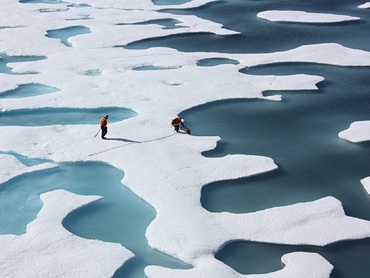
An international team of researchers from Norway, the US, Canada, and the UK has found that the melting of sea ice in the Arctic is twice as fast as previously thought, writes The Cryosphere.
These researchers have calculated the thickness of the sea ice between 2002 and 2018, and it turned out that in four of the seven Arctic seas, the average ice thickness is found to be declining 60 to 100 percent faster than satellite data show.
Researchers say the thickness of the sea ice in the Arctic is a sensitive indicator of catastrophic climate change. Global warming is most pronounced in this region where average rise in air temperatures are breaking records, causing both land and sea glaciers to melt rapidly.
Researchers have found statistically considerable reductions in ice cover in six of seven months of winter.
Thicker ice acts as an insulating cover, preventing the ocean from warming the atmosphere in winter, and protecting the ocean from the Sun rays in summer. Thin ice disappears almost completely during the summer months.