make preferable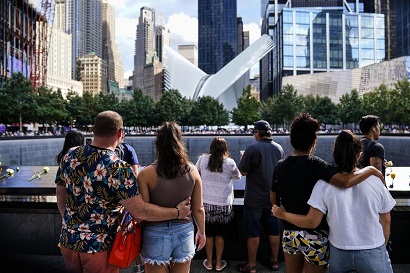
Americans are remembering Sept. 11 with moments of silence, volunteer work and other events 21 years after the deadliest terrorist attack on U.S. soil, AP writes.
Relatives of the victims and dignitaries will gather Sunday at the sites where the hijacked planes crashed on Sept. 11, 2001 - the World Trade Center in New York, the Pentagon and a field in Pennsylvania.
Other communities across the country mark the day with candlelight vigils, interfaith services and other commemorative events. Some Americans participate in volunteer projects on the day, which is federally recognized as Patriot's Day and National Day of Service and Remembrance.
But while the current 9/11 may not be a watershed moment, it remains a point of reflection on an attack that victimized some 3,000 people, sparked the "war on terror" worldwide and reconfigured U.S. national security policy.
It also evoked for a time a sense of national pride and unity among many, while at the same time turning Muslim Americans into targets for years of suspicion and generating a debate about the balance between security and civil liberties. The aftermath of 9/11, both subtle and overt, still reverberates through American politics and public life, the media notes.
On September 11, 2001, 19 suicide bombers hijacked four commercial planes. Two crashed into the World Trade Center towers in New York City, one into the Pentagon and another went down near Shanksville as passengers and crew attempted to disarm the hijackers. In all, more than 2,900 people were killed. The terrorist group al-Qaeda claimed responsibility for the attack.
The attacks were planned from Afghan territory, which provoked the U.S. invasion of Afghanistan in 2001. Al-Qaeda founder Osama bin Laden was the main target of the U.S. 'war on terrorism'. On May 2, 2011, bin Laden was killed in a U.S. special forces operation ordered by President Barack Obama at his own hideout in Pakistan.