make preferable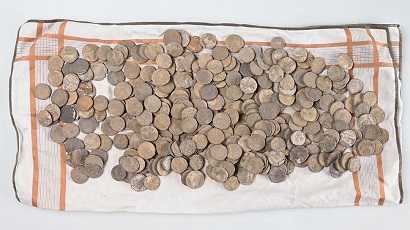
In 2017, a farmer from Lower Saxony, Germany, took his metal detector out for a walk through the fields near the village of Borß, unaware that he was about to make one of the region’s most significant Roman-era discoveries, reports Live Science.
Just a few centimeters beneath the surface, the detector signaled, and the man dug into the soil to uncover a true treasure trove: hundreds of silver coins, a gold ring, ingots, and a rare gold coin. The hoard had been buried for nearly two thousand years.
Archaeologists date the find to the early Roman period, when Germanic lands bordered the Roman Empire and were the scene of trade, military campaigns, and cultural exchange. The treasure included roughly 450 silver denarii, several silver ingots, a gold solidus, and jewelry—an exceptionally rare combination in a single hoard.
However, the discovery only became public in 2025, eight years later. During that time, the treasure remained hidden in the farmer’s home, as he feared legal trouble. In Germany, using a metal detector to search for antiquities without permission is considered a violation of cultural heritage laws.
Once he finally came forward, archaeologists and police began an official investigation, documenting and studying the find. Experts emphasize that the treasure’s value lies not just in its materials, but also in the context: the location, depth, and arrangement of the items provide insights into why it was hidden—possibly during a military campaign or in turbulent years that followed. Losing this context due to concealment is considered a real tragedy for science.
Despite the legal violation, the man was not punished, as the statute of limitations had expired. He completed official training for metal detector use and now assists archaeologists with field projects. Thus, the story of the illegal “treasure hunter” ended unexpectedly with repentance and collaboration.