make preferable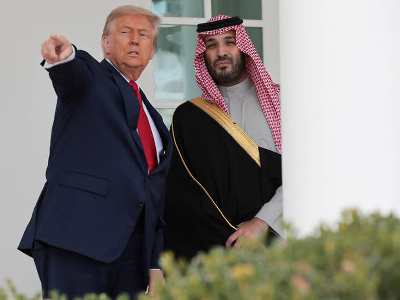
Saudi Crown Prince Mohammed bin Salman is actively pushing President Donald Trump to continue the war with Iran, arguing that the joint U.S.-Israeli military campaign represents a "historic opportunity" to reshape the Middle East, the New York Times reports, citing sources.
According to them, in a series of conversations last week, Prince Mohammed made clear to Trump that the goal should be the destruction of the Iranian government. He also argues that Iran poses a long-term threat to the Persian Gulf that can only be eliminated through regime change.
Israeli Prime Minister Benjamin Netanyahu also views Iran as a long-term threat, but analysts note that Israeli officials would likely consider a weakened, internally troubled Iranian state a "winning scenario," whereas Saudi Arabia views such an outcome as a serious and direct threat to its national security.
Senior Saudi and U.S. officials are concerned that if the conflict drags on, Iran will be able to carry out increasingly devastating attacks on Saudi oil facilities, and the U.S. could find itself drawn into an endless war.
Publicly, Trump has been inconsistent — at times hinting at a possible end to the conflict, at others signaling escalation. On Monday, the president posted on social media that his administration and Iran had held "productive talks regarding a full settlement of our hostilities," though Iran denied that any negotiations had taken place.
The economic and national security consequences of the war for Saudi Arabia are enormous. Iranian retaliatory drone and missile strikes, launched following the U.S.-Israeli strikes on Iran, have already caused significant disruptions to oil markets.
Saudi officials deny claims that Prince Mohammed has been pushing for the continuation of the war.
"The Kingdom of Saudi Arabia has always supported a peaceful resolution of this conflict, even before it began," the government stated, noting that officials "remain in close contact with the Trump administration, and our commitment remains unchanged." "Our primary concern today is protecting our people and civilian infrastructure from daily attacks," government representatives added. "Iran has chosen a dangerous game of brinkmanship rather than serious diplomatic solutions. This harms all parties, but most of all Iran itself."
Sources familiar with the discussions say Trump at times appeared ready to end the war, but Prince Mohammed pushed back and sought strikes on Iran's energy infrastructure to weaken the government in Tehran.
Prince Mohammed commands Trump's respect and has previously influenced his decisions. Sources note that Prince Mohammed even proposed that the U.S. deploy troops into Iran to seize energy facilities and overthrow the government.
In recent days, Trump has been giving more serious consideration to a military operation to seize Kharg Island, a key hub of Iran's oil infrastructure. Such an operation — involving airborne or amphibious forces — would be extremely risky.
Nevertheless, Prince Mohammed is pressing for ground operations, sources say.
Economic factors matter as much to the Saudis as political ones. Since the war began, Iran's retaliatory strikes have effectively blockaded the Strait of Hormuz, paralyzing the region's energy industry. The bulk of Saudi, UAE, and Kuwaiti oil passes through the strait.
Although Saudi Arabia and the UAE have built alternative pipelines, these routes have also come under attack. Analysts believe Prince Mohammed would likely prefer to avoid the war, but fears that if Trump backs down now, Saudi Arabia and the rest of the Middle East will be left facing an emboldened and defiant Iran.
Under such a scenario, Saudi Arabia would become a target for attacks, and Iran would be able to periodically blockade the Strait of Hormuz.
"Saudi officials certainly want the war to end, but how it ends matters," said Yasmine Farouk, director of the Gulf and Arabian Peninsula project at the International Crisis Group.
Saudi Arabia possesses a large stockpile of Patriot air defense systems, which it is using to protect oil fields, refineries, and cities from Iranian attacks. However, interceptor missiles are in short supply. Drone and missile strikes have already damaged an oil refinery and the U.S. Embassy, while debris from intercepted projectiles has killed two Bangladeshi migrants and wounded more than a dozen other foreign nationals.
Since the war began, Netanyahu has insisted on military operations capable of bringing about the collapse of the Iranian government. American officials have focused on degrading the country's missile and naval capabilities and are skeptical about the feasibility of toppling the Iranian government.
Saudi officials have long expressed concern that state collapse in Iran would pose a serious threat, as even after a government falls, elements of the military structure or new armed factions could continue attacking the kingdom, targeting oil facilities in particular.
Some analysts believe Prince Mohammed sees the war as an opportunity to expand Saudi Arabia's influence in the Middle East and is confident his country can protect itself even if the conflict continues.
In conversations with Prince Mohammed, Trump has expressed concern about oil prices and the damage to the economy. The prince has assured him these are only temporary difficulties.
American and regional officials are skeptical that oil markets will recover quickly after the war. Saudi Arabia cannot compensate for the losses caused by the conflict, as its overland pipeline carries only a fraction of the oil that normally passes through the Strait of Hormuz.
Even before the war began, Prince Mohammed was grappling with financial challenges amid his ambitious projects to transform the country into a global business hub by 2030. Budget deficits are projected for years ahead, and megaprojects and investments in artificial intelligence are placing heavy strain on the country's limited resources.
A prolonged war with Iran puts all of this at risk. The prince's success depends on creating a safe environment for investors and tourists.
Last week, Saudi Foreign Minister Faisal bin Farhan stated that the government's primary goal is to stop Iranian attacks on Saudi Arabia and neighboring countries.
"We will use all available levers — political, economic, diplomatic, and others — to stop these attacks," Faisal said.