make preferable
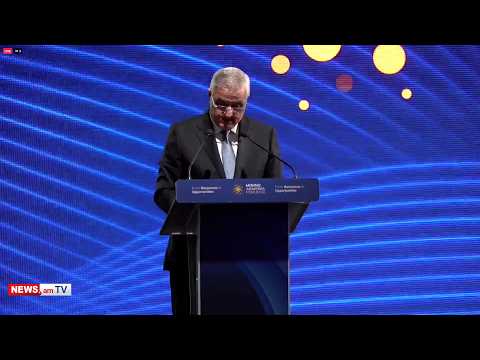
Ricardo Carvalho, a member of the Parliamentary Assembly of the Council of Europe (PACE), stated that the parliamentary elections held in Armenia on June 7 took place in a complex political and geopolitical context, and pointed to the existing problems in public administration, trust in institutions, media freedom and pluralism, independence of institutions, and protection of democracy.
Reflecting on the results of the observation mission, Carvalho noted that the elections were of great importance for the future of Armenia, as they took place amid the country's deep political and geopolitical transformations and the review of foreign policy relations.
These elections took place in a very complex context, he stated, pointing to significant regional tensions, reforms in Armenia and its foreign relations, as well as direct external pressure and interference, in particular from Russia.
According to Carvalho, this is not only about political pressure, but also about economic and informational tools of influence.
This interference is carried out through economic pressure, trade restrictions, energy threats, and informational actions that purposefully influence the elections, said the PACE member.
At the same time, he noted that, despite the current situation, Armenian citizens had the opportunity to choose between different political alternatives and participated in the electoral process.
However, according to Carvalho, problems still remain. He listed separately the directions in which Armenia still needs to continue working.
Naturally, challenges remain. Improving public administration, trust in institutions, media freedom and pluralism, the independence of institutions, and the protection of democracy requires long-term work, he stated.
Carvalho emphasized that these tasks should remain in the focus of the CoE, which, according to him, should be ready to assist Armenia in further implementing reforms.
The PACE member drew special attention also to Armenia's European vector. In his opinion, the election results testify to the pro-European path chosen by the Armenian people, as well as to the country's democratic resilience in the face of significant external pressure.
At the same time, Carvalho specifically stressed that Armenia's European choice should not be perceived as a decision imposed from outside.
Armenia's turn to Europe should not be viewed as a choice dictated from outside. It should stem from the political will of the country's citizens and the state's commitment to democracy, human rights, and the rule of law, he stated.
Carvalho pointed also to the role of the CoE in this process. According to him, the task of European organizations is not to determine the future of Armenia, but to contribute to the fact that its citizens can independently and freely make decisions about the future of their country.
This is not about choosing the future of Armenia for Europe. The latter’s role is to help Armenians freely choose their own future, he said.
The PACE member noted that he was in Armenia during the parliamentary election period and had the opportunity to follow the process on the ground.
In conclusion, Carvalho linked the democratic development of Armenia with the sovereignty of the state and its relations with Europe.
A more democratic and sovereign Armenia, which is closer to Europe, also contributes to the security of Europe and the stability of the region, he stated.