make preferable
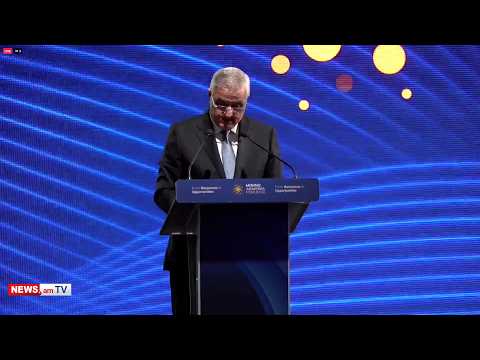
The parliamentary elections in Armenia on June 7 were generally organized, but the electoral process was accompanied by serious problems related to both external pressure and internal shortcomings of the electoral system, stated Damien Cottier, head of the observation delegation of the Parliamentary Assembly of the Council of Europe (PACE).
Presenting a report on the results of their election observation, Cottier noted that on June 7, Armenia’s voters had the opportunity to choose between different political forces, and the elections themselves were generally well organized, technically prepared, peaceful, and inclusive.
At the same time, he stressed that the positive assessment of the organizing of the election day itself should not overshadow the problems that emerged during the entire election campaign.
“But let’s be honest, Armenian democracy was subjected to strong external pressure,” Cottier stated.
According to him, the elections took place in an extremely tense geopolitical context, characterized by direct interference from Russia.
Among the forms of pressure, the head of the PACE delegation mentioned trade restrictions, energy-related threats, diplomatic pressure, attempts to influence the election campaign, and direct threats to Armenia’s security. According to him, such threats were also used to present the country’s European aspirations as a threat and thus influence the election results.
However, as Cottier emphasized, the problems with the electoral process in Armenia were not limited to external interference.
“Our observation revealed weaknesses and shortcomings,” Cottier stated.
One of the main problems, he noted, was the nature of the election campaign, which, in his assessment, was extremely difficult and polarized.
According to the head of the PACE delegation, the reports of vote buying were of particular concern. These reports have become the basis for numerous investigations and criminal prosecutions, including against opposition candidates and activists.
Thus, the focus of the observers was not only on possible violations, but also on the consequences of the use of law enforcement mechanisms against participants in the political process.
Cottier touched also upon the pressure on Armenia’s public sector workers, as well as the social and economic measures that the government implemented immediately before the elections.
According to him, this set of circumstances has raised serious questions from the point of view of ensuring a level playing field for participants in the election campaign.
The head of the PACE observation delegation specifically addressed the use of administrative resources and the financing of parliamentary candidates in Armenia.
The report presented by Cottier emphasizes the need to introduce more effective mechanisms for overseeing the funding of election campaigns.
“Candidate financing is still not sufficiently overseen,” he stated.
Among the PACE recommendations are the strengthening of oversight over compliance with funding rules, as well as the application of sanctions for the misuse of administrative resources.
Cottier stressed that a democratic electoral process implies not only the technical correct conduct of voting, but also a level playing field for political forces.
Cottier noted that the media environment is also a problematic area.
In his assessment, Armenia’s media landscape remains pluralistic, but at the same time extremely polarized.
PACE observers were particularly concerned about the pre-election activity on the Internet. This concerns disinformation, content created using artificial intelligence, as well as the use of various information tools to divide society and discredit political opponents.
According to Cottier, these phenomena negatively affect the quality of public debates and the ability of voters to receive objective information about political forces.
In this regard, PACE considers it necessary to further improve the mechanisms for combating such phenomena, while maintaining freedom of speech and pluralism in Armenia.
The most specific dissatisfaction in Cottier's address concerned the decision of the Central Electoral Commission (CEC) of Armenia regarding the voting results in a number of polling stations.
According to him, the CEC's decision not to recognize the results of several polling stations was of significant importance for the opposition party's parliamentary representation.
Cottier noted that the matter was about a party—i.e. the opposition Prosperous Armenia Party—that had barely passed the 4% electoral threshold set by law. As a result, the party received 3.99%.
The head of the PACE delegation stressed that the possibility of additional verification of the voting results in the relevant constituencies could have been essential to determine whether the aforesaid political force had passed the required threshold.
“The possibility of such a review should be based on reliable, transparent, and verifiable reasons. Unfortunately, this did not happen,” Cottier stated.
It was in this part of his address that one of the most serious criticisms of the work of the election administration was voiced. In the opinion of the PACE observation delegation, decisions that may affect the parliamentary representation of a political force should be accompanied by clear and verifiable justification.
Cottier, at the same time, noted that the organizing of these parliamentary elections themselves demonstrated the Armenian authorities’ ability to conduct a technically prepared electoral process.
“Armenia has proven that it can organize technically successful, peaceful, and inclusive elections,” he said.
However, according to him, democracy is not limited to organizing voting day alone. It also implies a level playing field for participants, impartiality of information, effective mechanisms of legal protection, citizens' trust in institutions, and the state's ability to withstand external pressures.
"Progress must continue," the head of the PACE delegation emphasized.
As per Cottier, the submitted report contains clear recommendations on eliminating the problems that have emerged. Among them are strengthening the protection of Armenia’s electoral process from external interference, ensuring the independence of the country’s electoral administration, establishing sanctions for the abuse of administrative resources, ensuring a transparent and substantiated review of the voting results, as well as further strengthening parliamentary representation.
Cottier stressed that the Armenian authorities have received a clear mandate and must implement it, taking into account the shortcomings noted.
At the same time, he said, PACE and the Venice Commission of the Council of Europe are ready to continue assisting Armenia in strengthening its state institutions in line with European standards.
At the same time, the head of the PACE delegation noted that the recorded shortcomings do not detract from the fact that the Armenian authorities have managed to ensure the overall organized conduct of the voting itself. In his assessment, the future task is to eliminate the shortcomings that have emerged and ensure not only technically correct elections, but also a level playing field for political competition, transparency of decisions of electoral bodies, and citizens' trust in the electoral process.