make preferable
Dubai, which until recently had been celebrating yet another record-breaking year for tourism, has seen a sharp drop in visitor numbers following the military conflict involving the United States, Israel, and Iran, CNN reports.
In 2025, the emirate welcomed a record 19.59 million international tourists; however, after missile strikes in the region and attacks on UAE territory, the situation changed dramatically. Hotel occupancy fell from around 80% to an expected 10% in the months following the attacks in March.

Now Dubai authorities are launching new measures to restore tourist inflows. One of them is the “A Dubai Invite” program, under which UAE residents and citizens are offered rewards worth up to 3,000 dirhams (about $816) for inviting relatives or friends to visit the emirate.
The program launched at the beginning of the month. Residents over 18 with a valid UAE ID can invite up to three guests for stays until October 31. The package includes hotel accommodation offers and discounts at restaurants.
Invited tourists must not reside in the UAE and must hold a valid tourist visa. They can travel to the country by air, sea, or land.
“At a time when personal connections and trust are playing an increasingly important role in choosing a travel destination, the program turns to those who know Dubai best—its residents, who can invite their families and friends here,” said Noor Al Geziri, a representative of Dubai’s Department of Economy and Tourism.
The program is the latest attempt by the authorities to restore Dubai’s image as a safe tourism hub. Earlier, some fees for the tourism industry were canceled, including the overnight accommodation tax at expensive hotels and a 7% municipal charge on hotel and restaurant bills.

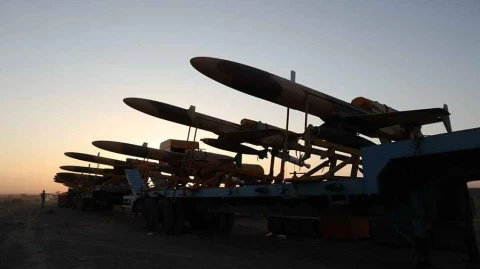
Dubai’s reputation as a “safe haven” in the Middle East was seriously damaged after missile and drone attacks linked to the conflict surrounding Iran. Although most of the missiles were intercepted, some facilities sustained damage, including the five-star Fairmont The Palm hotel and the iconic Burj Al Arab hotel, which was closed for a major 18-month renovation.
Dubai International Airport—one of the world’s largest transport hubs—was also temporarily closed in March. Several airlines, including British Airways and Emirates, suspended flights to the emirate.
Experts note that restoring the physical infrastructure will be relatively easy; however, bringing back Dubai’s former image as a completely safe destination may prove more difficult.
“This is the worst-case scenario for Dubai, because its very essence depended on the image of a safe oasis in a troubled region,” said Cinzia Bianco, Gulf expert at the European Council on Foreign Relations.
Despite this, specialists believe that trust in the UAE has not been destroyed completely. According to Gates Hospitality founder Naim Maadad, the main obstacle now is not the condition of the infrastructure but the psychological effect of the conflict.
“International audiences often view the Middle East as a single region, without distinguishing between individual countries, and this naturally affects travel decisions,” he noted.
At the same time, UAE authorities emphasize that Dubai’s airports, hotels, restaurants, and tourist attractions continue to operate as usual. The main task now is to convince travelers to choose the emirate once again as a safe destination.