make preferable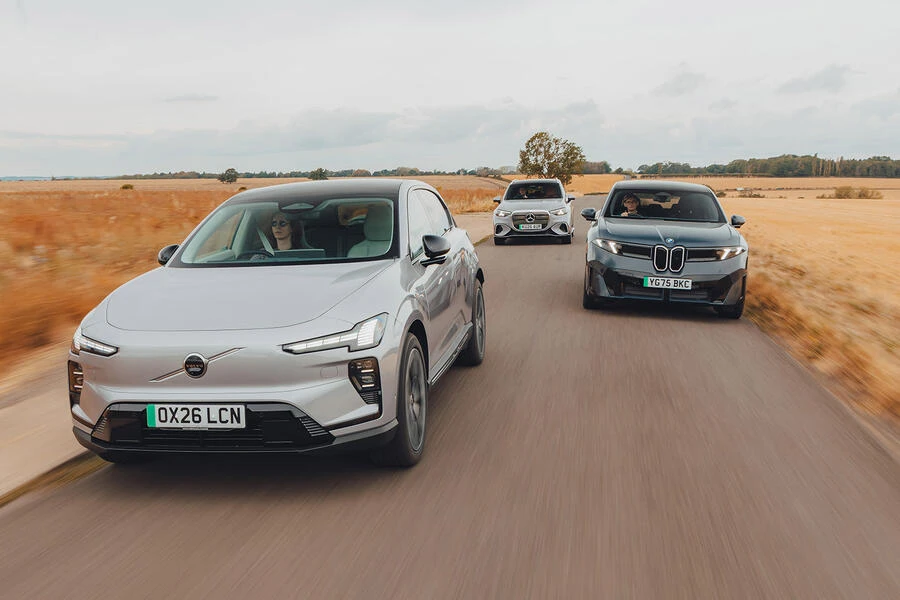
Electric cars are gradually beginning to surpass cars with internal combustion engines not only in terms of dynamics, but also range, efficiency, and charging speed, Autocar reports.
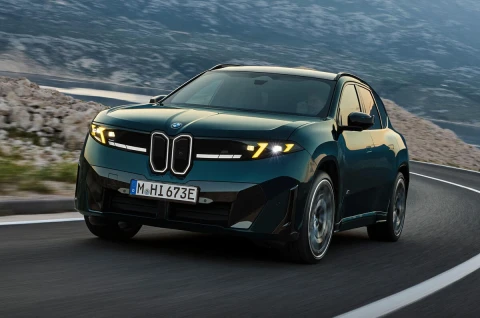
It compared three new premium electric crossovers: the BMW iX3 50 xDrive, the Mercedes-Benz GLC 400 4Matic Electric, and the Volvo EX60 P10 AWD, and came to the conclusion that the new generation of cars has made significant progress.
All three models are built on new platforms specially developed for electric cars. Manufacturers promise buyers a large range, fast charging, high power, and more spacious interiors.
On paper, the clear leader is BMW. Its 108.7 kWh battery provides a claimed range of 792 km, while Mercedes promises 637 km, and Volvo—649 km.
The difference was even more noticeable in real-world testing. The BMW showed a claimed range of around 689 km, Mercedes 570 km, and Volvo—517 km. The BMW was also the most efficient and recharged faster than the others.
The Mercedes-Benz, despite its more modest specifications on paper, exceeded its own efficiency figures. However, its battery is smaller, its range is shorter, and its charging speed is slower than that of its competitors.
The Volvo has become an intermediate option: its 503 hp powertrain provides impressive dynamics, but its efficiency was lower than that of the BMW and Mercedes. The EX60 version with a claimed range of about 805 km will appear later, so the more affordable modification took part in the comparison.
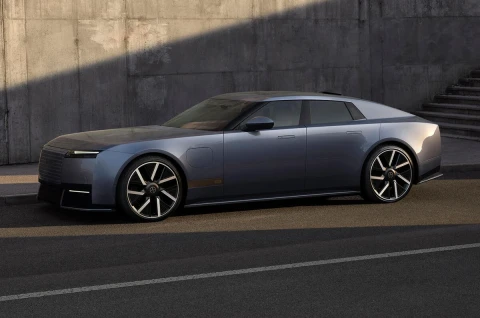
At the same time, these cars are very different in appearance. All three belong to the “crossover” format, but BMW emphasizes the reinterpretation of the brand design of previous decades, Mercedes actively uses elements of its classics, and Volvo offers a more restrained and clearly “electric” look.
The differences are even more noticeable in their interiors. Mercedes has retained a more traditional interior architecture, although it has been supplemented with a huge 39.1-inch screen. BMW and Volvo have gone a more futuristic route, with a minimum number of physical controls.
This is where some strange solutions were found in the new electric cars. All three cars have unusual door handles, which may not be as convenient as conventional mechanical ones. For example, Volvo does not have a traditional key at all; instead, it is recommended to use a smartphone, card, or a special trinket.
Instead, Mercedes has come up with a really useful solution: the front trunk lid opens simply by pressing the brand logo. The GLC also has the most capacious front trunk, so large that it can be fully used for everyday shopping.
The main conclusion of this Autocar test is that the new generation of electric cars has noticeably approached the level where abandoning the internal combustion engine no longer necessarily means serious compromises.
At the same time, of the three models, the BMW iX3 has become a clear leader in terms of range, efficiency, and charging speed, while Mercedes and Volvo emphasize other advantages: comfort, design, and character.