make preferable
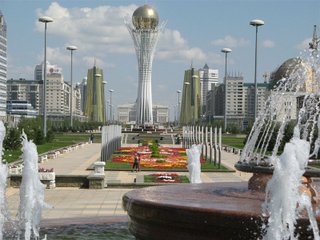
Russia is making “a real fuss” the threshold of the OCSE Summit in Astana. It needs a semblance of intensified activities in the post-Soviet area – and not only there. Moscow is concerned that the Astana Summit may follow the scenario of its Istanbul counterpart, when Russia actually had to oppose the entire international community, which was highly critical of its policy in Chechnya.
The OSCE Summit in Istanbul was about to fail because of Boris Yeltsin’s position. He strongly objected to the international community’s criticism of the military operation in Chechnya. In Istanbul, Russia and the West would not understand each other. No less fierce opposition is expected in Astana – this time between Russia and Georgia, writes the Azerbaijan-based “Zerkalo” (Mirror) newspaper.
Georgia is going to severely criticize Russia at the OSCE Summit in Kazakhstan. In turn, Russia will not sign any document with even a hint of criticism of its position on the South Ossetian conflict. That is, Georgia-related issues may cause a split, and the Astana Summit may thus face a threat of failure.
The OSCE Leaders will meet in Astana for further work on consolidation of international security. Many of the provisions approved at the Istanbul Summit in 1999 have not so far been implemented. Specifically, the Treaty on Conventional Armed Forces in Europe (CFE) – a fundamental document on military security in the OSCE responsibility area - has been ratified by only four states.
Thus, the Summit is likely to focus on Russian President Dmitry Medvedev’s proposal for a European security treaty and France’s similar proposal for Euro-Atlantic and Eurasian security area.
As regards the settlement of the Nagorno-Karabakh problem, no breakthrough should be expected - at least for the reason that the Summit has lately shown a tendency to highlight the Transdniestria problem. The issue has acquired greater importance since the Russian-French-German top-level meeting.