make preferable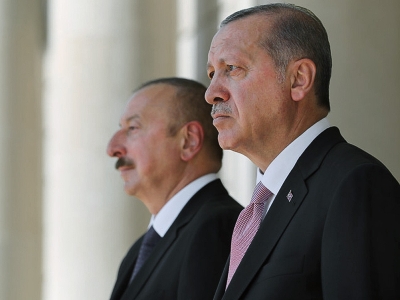
In recent weeks, pronouncements that Turkey and Armenia are seeking to normalise ties for the first time in a generation has prompted at least some hope of reconciliation between the two. There is ample scepticism, for obvious reasons, over the possibilities of success, but the appointment of special envoys in each country devoted to the task seems to constitute some tangible progress, security analyst Neil Hauer wrote in his article published in The Arab Weekly. The article continues as follows, in part:
But there is another external factor that is more likely to derail the process than even the century-long mutual recrimination between the two: the Baku-sized roadblock standing squarely between Yerevan and Ankara.
A number of Turkish officials close to President Recep Tayyip Erdogan made statements that Turkey was ready to normalise ties with Armenia, while in Yerevan, Prime Minister Nikol Pashinyan and others reiterated Armenia’s long-standing position of willingness to normalise without preconditions.
The question seemed to be ready to move forward, but with one unspoken caveat on which all hopes of progress would rest: how much, if at all, would Turkey care to placate Azerbaijan?
For Baku, its strategy since the end of last year’s war has been one of unbridled pressure toward its defeated neighbour. In an effort to force Armenia to both abandon the Russian-guarded rump of Karabakh entirely and to allow unfettered access between Azerbaijan proper and its Nakhchivan exclave, Azerbaijan has closed Armenia’s main north-south road, occupied parts of its territory and launched offensives into Armenia proper.
Azerbaijani President Ilham Aliyev has repeatedly stressed that “the Karabakh conflict is over” and that “the Zangezur corridor will be opened,” two goals he clearly hopes Turkey will help him with. For a time, it seemed unclear whether Ankara was on board with this provocative strategy, as many months passed without official Turkish comment on Baku’s actions along the Armenian border.
That question, however, appears to have been decided. In the last two months, Turkish diplomats have started to reference Azerbaijan repeatedly when describing potential rapprochement with Armenia. Turkish Foreign Minister Mevlut Cavusoglu provides the prime example of this, with statements that Ankara will “act together with Azerbaijan at every step” in its Armenia negotiations and referencing the final settlement of the Karabakh conflict (something that is not remotely on the horizon) as coming alongside Turkey-Armenia progress. Whatever happened behind the scenes, Erdogan’s administration apparently decided it would rather keep Aliyev fully onside rather than risk any serious progress with Armenia.
Baku has torpedoed this process before. In 2008, Yerevan and Ankara began a series of negotiations on reopening the border, with a few high-profile football matches between the sides, before Azerbaijani pressure on Turkey led to its collapse. This time, however, Turkey is even openly signalling that it will not engage Armenia beyond the limits Baku sets for it, however, oppressive those may be. In the current case, Aliyev’s conditions for Armenia are both a clear non-starter for serious negotiations and something the Azerbaijani leader appears unwilling to back down from. If Turkey is truly hitching its own process with Armenia to this wagon, it too will remain at the station.
At the moment of writing, there were still more seemingly hopeful, yet ultimately noncommittal, signs of progress on the horizon: Pashinyan and Aliyev agreed at a summit in Brussels to reopen the Soviet-era rail link connecting the two countries, another tenet of last year’s cease-fire agreement. Russia remains a wild card: it continues to publicly push for the reopening of transit links between Armenia and Azerbaijan, as well as for Turkish-Armenian normalisation, but its sincerity is in question as the status quo of the region suits Moscow just fine. But until the railway ties are physically being laid across the Armenia-Turkey or Armenia-Azerbaijan border, all this remains empty talk and merely more verbal agreements for their own sake rather than anything tangible.